
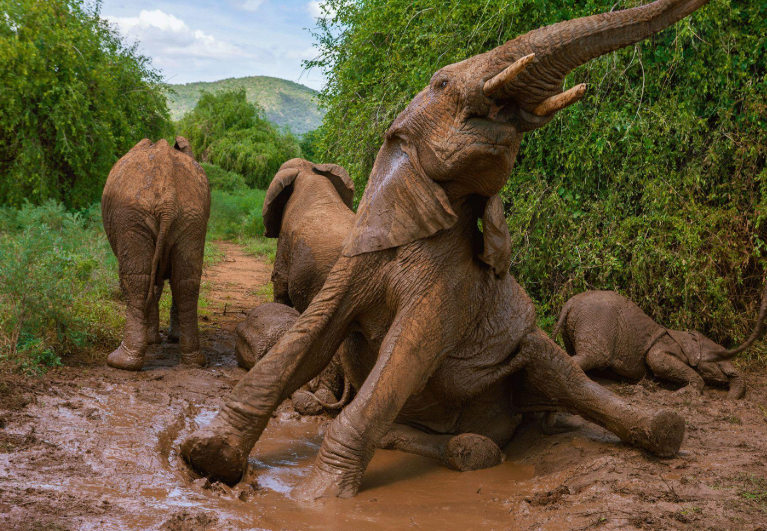
Yes, elephants can get sunburned, especially on areas where their skin is thinner or has less protection. Although their skin can be up to 2.5 centimeters (1 inch) thick in some places, it is not completely resistant to the sun’s harmful ultraviolet (UV) rays. Sensitive areas such as the ears, back, and around the eyes are more vulnerable to sun damage, particularly during long periods of intense sunlight.

Fortunately, elephants have developed remarkable ways to protect themselves from the heat. One of their favorite strategies is covering their bodies with mud or dust. This natural coating acts like a layer of sunscreen, shielding their skin from UV rays while also helping to keep them cool. As the mud dries, it can also repel insects and parasites, providing additional protection.

Water plays an equally important role in an elephant’s daily routine. Elephants frequently bathe in rivers, lakes, and waterholes before spraying themselves with water using their trunks. These cooling behaviors help regulate body temperature and prevent overheating in hot climates. After bathing, they often throw sand or dust over their wet skin to create an extra protective layer.

Healthy habitats with access to water, shade, and loose soil are essential for elephant well-being. Trees provide relief from the midday sun, while mud wallows and water sources allow elephants to cool down naturally.

By protecting these habitats, conservation efforts ensure that elephants can continue using the behaviors they have relied on for thousands of years. These simple yet effective adaptations demonstrate how elephants have evolved to thrive in some of the world's warmest environments while staying safe from the sun.
