
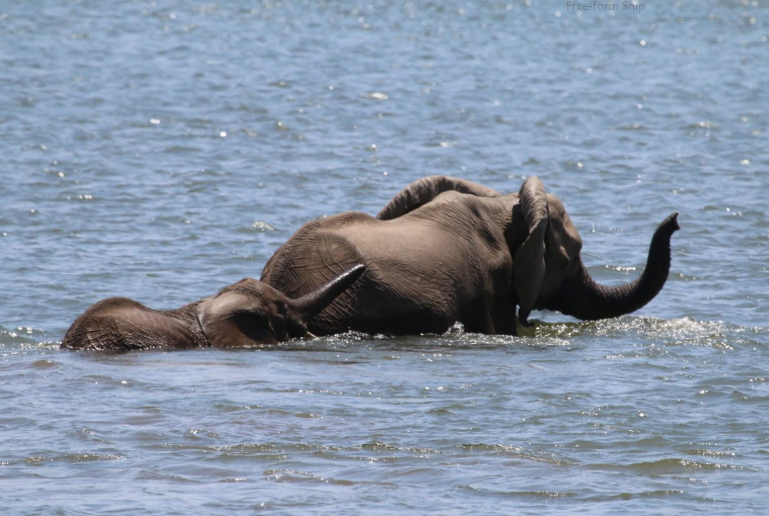
Elephants are the largest land animals on Earth, yet many people are surprised to learn that they are also excellent swimmers. Despite their enormous size, elephants can move confidently through rivers, lakes, and even coastal waters. Swimming is a natural ability that helps them travel, find food, and survive in changing environments.
Unlike many land mammals, elephants do not struggle to stay afloat. Their bodies are naturally buoyant, allowing them to float with relatively little effort. Once in deep water, they paddle with all four legs in a motion similar to a dog paddle, moving steadily and efficiently across the surface.
One of the elephant's most remarkable adaptations for swimming is its trunk. While the rest of the body remains submerged, the trunk extends above the water like a natural snorkel. This allows elephants to breathe continuously without lifting their heads, making it possible to swim through deep water for long periods.
Elephants are known to cross wide rivers and lakes during seasonal migrations. In some regions, they even swim between islands or across coastal channels in search of food, water, or safer habitats. Their strong muscles, endurance, and calm movements make them capable of covering impressive distances when necessary.
Young calves also learn to swim from an early age. At first, they stay close to their mothers or other adult females, who guide and support them through the water. In deeper areas, calves may briefly rest against their mothers or be gently encouraged forward until they become stronger swimmers. These early experiences help build confidence and develop essential survival skills.
Swimming is not only practical—it also helps elephants stay healthy. Water provides welcome relief from intense heat, cools their massive bodies, and supports their joints by reducing the strain caused by their weight. After a swim, elephants often spray themselves with water, roll in mud, or cover their skin with dust to protect it from the sun and biting insects.
Elephants are also known to enjoy spending time in water. Herds can often be seen splashing, playing, and interacting in rivers or waterholes. Calves chase one another through the shallows, while adults use their trunks to spray water over themselves and their companions. These playful moments strengthen social bonds and offer opportunities for young elephants to learn by observing older members of the herd.
However, access to clean rivers, wetlands, and natural waterholes is becoming increasingly important as habitats change. Drought, habitat loss, and human development can reduce the availability of the water sources elephants rely on for drinking, bathing, and swimming. Protecting these freshwater ecosystems benefits not only elephants but also countless other species that share the same environment.
The next time you see an elephant gliding effortlessly through the water with only its trunk above the surface, remember that this gentle giant is perfectly adapted to life both on land and in the water. Its ability to swim is another reminder of the remarkable ways nature equips animals to survive.
By protecting elephants and the rivers, wetlands, and migration routes they depend on, we help ensure that future generations can continue to witness one of nature's most extraordinary swimmers in the wild.