
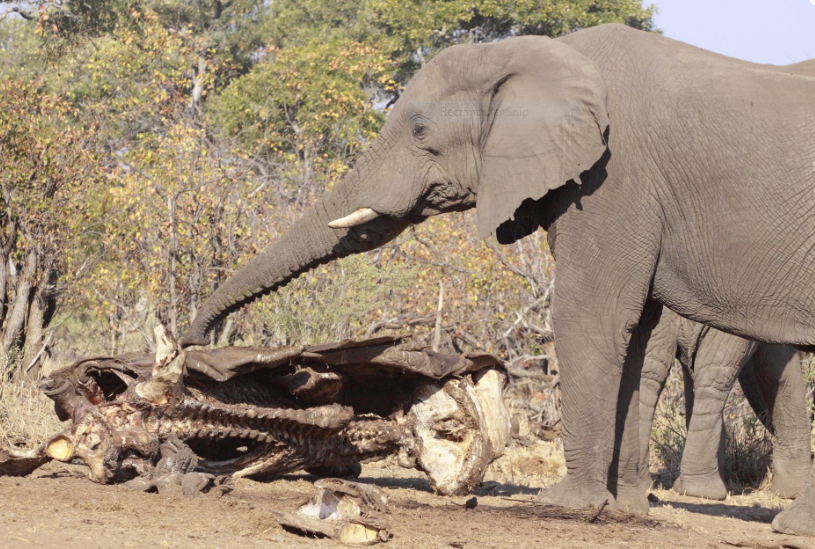
Among the many remarkable qualities of elephants, their responses to death are perhaps the most moving. For decades, researchers, conservationists, and wildlife photographers have documented unusual behaviors when elephants encounter the body or bones of another elephant. These observations have led many people to ask an important question: Do elephants mourn their dead?
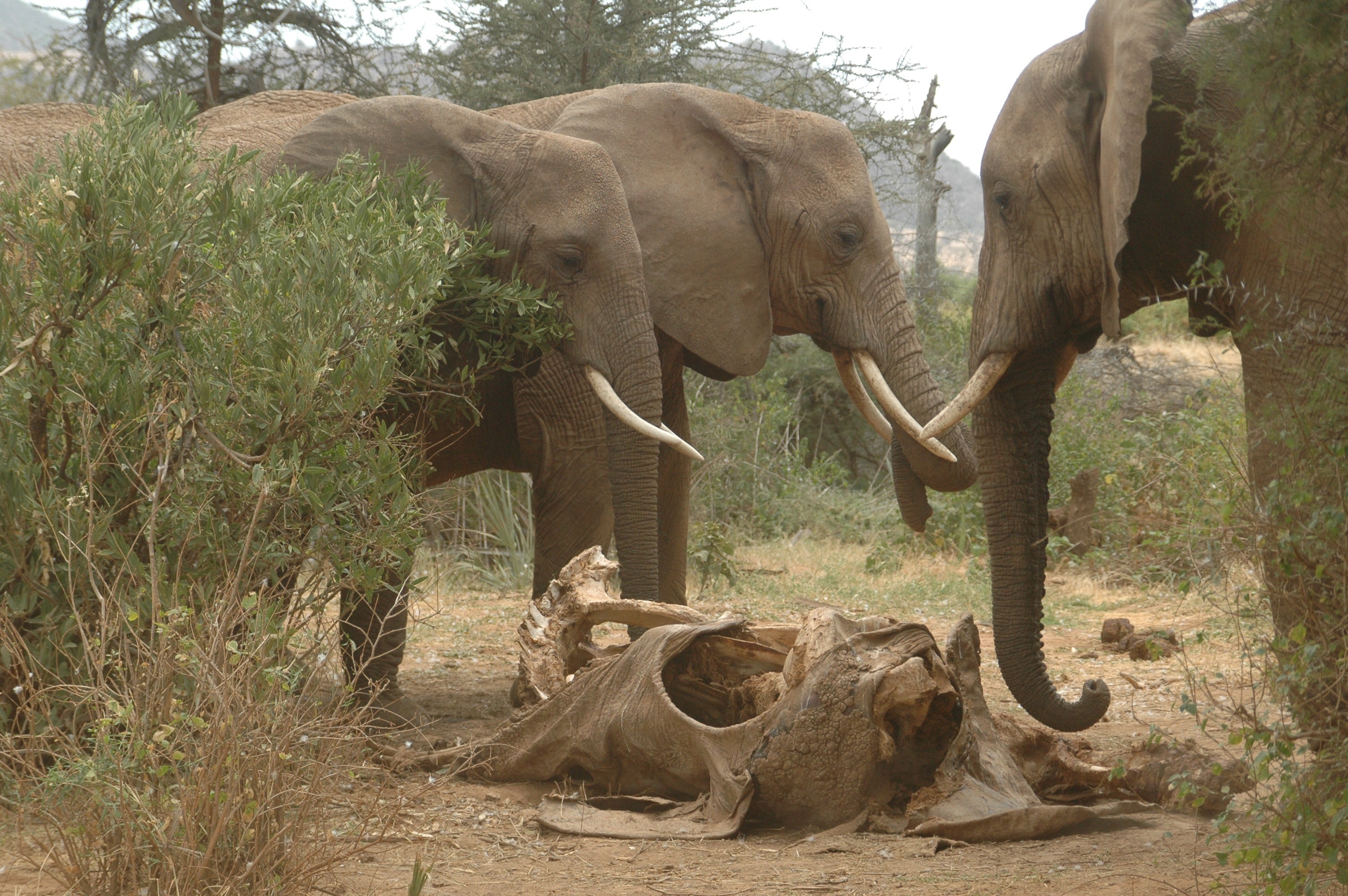
While scientists cannot know exactly what an elephant experiences emotionally, growing evidence suggests that elephants respond to death in ways that are both complex and deeply social. Their actions reveal the strength of their family bonds and the importance of long-term relationships within elephant society.
A Quiet Response to Loss
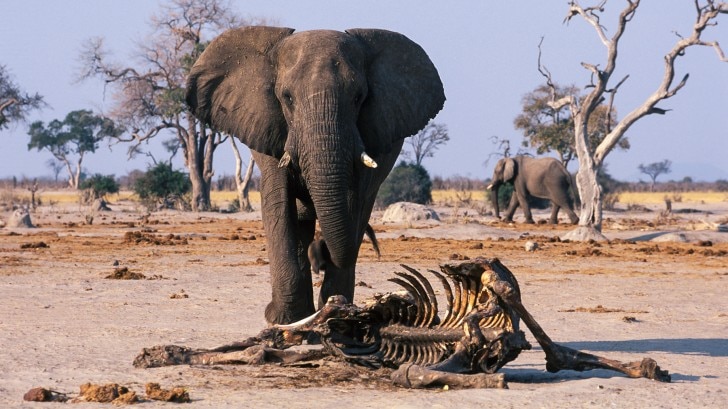
When an elephant dies, members of its family often do not simply walk away. Instead, they may gather around the body, standing quietly for extended periods. Some elephants gently touch the deceased with their trunks, while others investigate the face, tusks, or feet with remarkable care.
These interactions are usually calm rather than frantic. In some cases, elephants remain nearby for hours, showing little interest in feeding or continuing their journey. Such behavior suggests that the death of a family member is a significant event for the herd.
Returning to Familiar Places

Researchers have also observed elephants returning to locations where another elephant has died. Even months or years later, they may pause at these sites, carefully examining bones or tusks left behind.
Elephants appear especially interested in the remains of their own species. They often explore skulls and tusks with their trunks, spending more time investigating elephant bones than the remains of other animals.
Although scientists continue to study why elephants behave this way, these repeated visits suggest that they recognize something meaningful about these places and the individuals once connected to them.
The Importance of Memory
Elephants are famous for their exceptional memories. They remember migration routes, water sources, and the members of their family over many years.
Because these social bonds can last a lifetime, the loss of a close companion may have lasting effects on the herd. A matriarch's death, for example, can leave younger elephants without the experience and leadership that guide the family through changing seasons and challenging environments.
Strong memories may help explain why elephants sometimes revisit places associated with individuals they once knew.
Family Bonds That Last a Lifetime

Female elephants usually remain with their families throughout their lives. Mothers, daughters, sisters, and grandmothers work together to protect calves, locate food and water, and respond to danger.
These close relationships create a society built on trust and cooperation. When one member is lost, the effects may be felt by the entire family, particularly if the individual played an important role in caring for young elephants or leading the herd.
Signs of Compassion
Elephants have been observed staying beside injured or dying companions, offering gentle trunk touches and remaining close even when there is no immediate danger nearby.
Adults sometimes help weakened elephants stand, protect vulnerable individuals, or wait for slower family members during long journeys. These acts of care demonstrate the importance of cooperation and social support throughout an elephant's life.
Although such behaviors should not automatically be interpreted as human grief, they clearly show that elephants value their relationships and respond to the needs of others.
What Scientists Say
Researchers approach this subject with care. Because emotions cannot be measured directly in animals, scientists avoid drawing conclusions based solely on human interpretations.
Instead, they study observable behaviors—how often elephants remain near a body, how they interact with bones, whether they revisit certain locations, and how family members behave after losing a companion.
Together, these observations provide compelling evidence that elephants have an unusually sophisticated awareness of death and strong emotional connections within their families.
Why It Matters for Conservation
Understanding the emotional lives of elephants reminds us that every individual is part of a larger family network. The loss of a single elephant can affect the knowledge, stability, and well-being of an entire herd.
Threats such as poaching, habitat loss, and human-wildlife conflict do more than reduce elephant populations—they can also break lifelong social bonds and disrupt generations of shared experience.
Protecting elephants means protecting the families and communities they depend upon. By safeguarding their habitats and allowing herds to remain together, we help preserve not only one of Earth's most iconic animals but also the rich social lives that make elephants truly extraordinary.
Whether their behavior is described as mourning, remembrance, or profound social awareness, elephants remind us that strong relationships are essential in the natural world. Their quiet responses to loss encourage us to value compassion, protect wildlife, and ensure that future generations can continue to witness these remarkable animals living freely in the wild.