
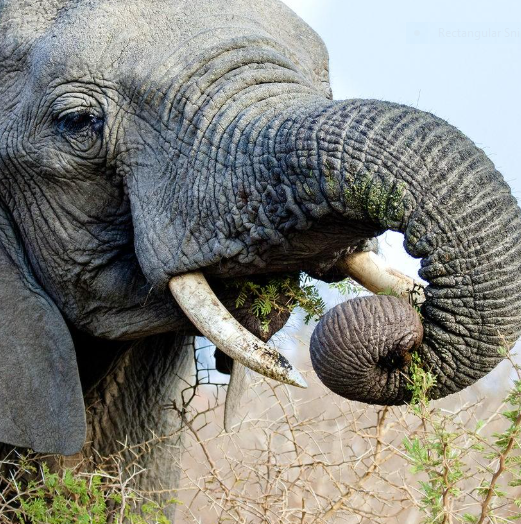
Just as people can be right-handed or left-handed, elephants may also show a preference for using one side of their trunk more often than the other. Although an elephant's trunk contains no bones, it is made up of more than 40,000 muscles, allowing it to perform incredibly precise movements. From picking up a single blade of grass to lifting heavy tree branches, the trunk is one of the most versatile tools in the animal kingdom.

Researchers have observed that many elephants consistently curl or favor one side of their trunk when feeding, grasping objects, or exploring their surroundings. This behavior is known as trunk laterality and is similar to handedness in humans. Over time, repeated use of one side may even leave visible signs, such as uneven wear on the tips of the trunk or tusks, especially in elephants that frequently strip bark from trees or gather vegetation.

Scientists believe that this preference may be linked to brain function, with one side of the brain playing a greater role in controlling certain movements. However, not every elephant shows the same preference. Some individuals appear to switch sides depending on the task, while others consistently rely on one side throughout their lives.

Studying trunk preferences helps researchers better understand elephant behavior, intelligence, and neurological development. It also highlights the extraordinary complexity of these gentle giants. Every movement of an elephant's trunk reflects millions of years of evolution, allowing it to feed, communicate, drink, smell, and interact with remarkable precision.
![“코끼리 아저씨는 코가 손이래” 만능코의 비밀 풀렸다 [사이언스샷]](https://images.openai.com/static-rsc-4/QenhwclgtnzNLsYp8oyGnAdyru9sAgFyK_pETIlyscpbYNId-cQvFoEydL69Y0uNW-TBERkSLozKY2V8ksaEm1GhyyVH_CBjOQeLtssouf1MCfCZGLORkCnxOievrvU4dRyQKDpG3ZczEt-bC6NN11qfaXiT6gwHkpa2akbqhl88jDrIMqGFm5gRn2nHm0Ax?purpose=fullsize)
The more we learn about these unique behaviors, the better we can appreciate and protect one of the world's most intelligent and fascinating animals.
