
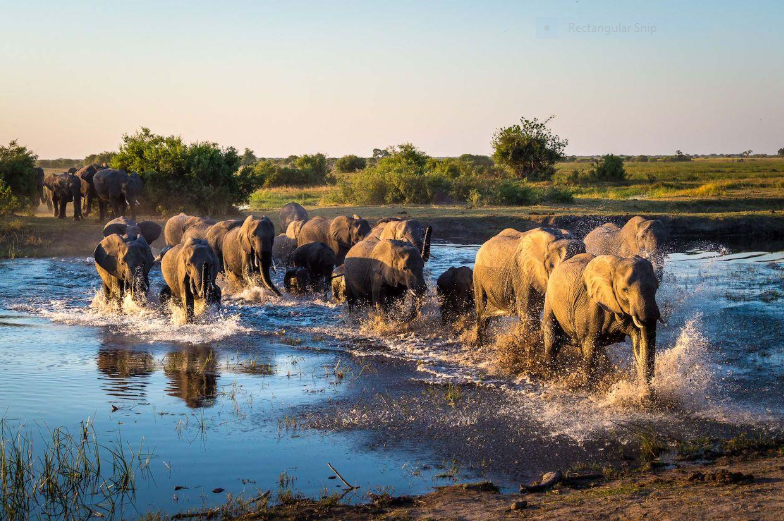
Across Africa and Asia, elephants may travel through forests, grasslands, wetlands, and human-shaped landscapes in search of the resources their families need. Not every elephant population follows a fixed migration, but many undertake regular seasonal movements, sometimes covering long distances between feeding areas and dependable water sources.
These journeys are not random. They reflect generations of accumulated knowledge, changing weather patterns, and the extraordinary memory of experienced elephants.

Moving in Search of Food
Elephants require a varied and abundant plant diet. As vegetation changes with rainfall, temperature, and season, herds may leave areas where food has become scarce and move toward places with fresh grass, leaves, bark, roots, or fruit.
During wetter periods, new plant growth can draw elephants into grasslands and floodplains. As dry conditions return, they may shift toward woodlands, river systems, or other habitats where vegetation remains available. Their movements allow them to respond to a landscape that is constantly changing.
By feeding as they travel, elephants also shape the environment around them. They open pathways, disperse seeds, and influence the balance between wooded areas and grasslands.
The Search for Water
Water is one of the strongest influences on elephant movement. Elephants need regular access to drinking water, particularly in hot and dry environments. When temporary pools disappear or rivers shrink, families may travel farther to reach permanent waterholes, springs, or river systems.
Older females can hold vital knowledge about the locations of seasonal water sources and feeding grounds, including places that helped their families survive earlier droughts. This experience may become especially important during periods of environmental stress.

When Ancient Pathways Disappear
Habitat loss and fragmentation are making many elephant journeys increasingly dangerous. A route once surrounded by continuous habitat may now cross farmland, highways, fences, or expanding settlements. When traditional paths are blocked, elephants can lose access to seasonal food and water, while encounters with people become more frequent.
Protected areas remain essential, but they are often not large enough to meet every need of a wide-ranging elephant population. Wildlife corridors and connected landscapes allow elephants to move between suitable habitats without becoming trapped in isolated pockets. IUCN identifies ecological connectivity as essential for reaching food, water, shelter, and breeding opportunities, and calls for greater protection of corridors across elephant range states

Elephants crossing a broad natural corridor between protected habitats.)
Every elephant journey tells a story of memory, adaptation, and family cooperation. Protecting elephants therefore means safeguarding more than the places where they stop to feed or drink. It means preserving the pathways between them.
By keeping habitats connected and allowing traditional routes to remain open, we give elephant families the freedom to follow the rains, reach life-sustaining water, and pass their knowledge safely to the next generation.
