
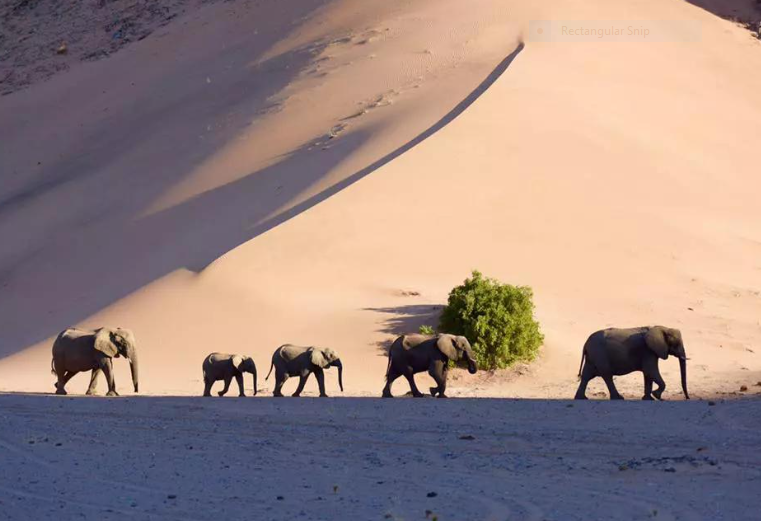
Desert elephants are among nature's most remarkable survivors. Found primarily in the arid landscapes of Namibia and parts of Mali, these elephants are not a separate species but African elephants that have adapted their behavior to life in one of the world's harshest environments. With scorching temperatures, limited vegetation, and scarce water, every day presents a challenge.
One of their greatest adaptations is their ability to travel long distances in search of food and water. Desert elephants can walk more than 70 kilometers (43 miles) in a single day, relying on their exceptional memory to locate seasonal rivers, hidden waterholes, and feeding areas. Older matriarchs play a vital role by leading their families along routes that have been passed down through generations.

To cope with intense heat, desert elephants adjust their daily routines. They are most active during the cooler hours of the morning and evening, spending the hottest part of the day resting in the shade whenever possible. Their broad feet help them move across soft sand, while their powerful trunks allow them to dig into dry riverbeds to uncover underground water. They also feed on a wide variety of drought-resistant plants, making the most of the limited food available.

Despite these incredible adaptations, desert elephants face increasing threats from prolonged droughts, habitat loss, and human activities. Protecting their fragile desert ecosystems is essential for their survival. By conserving these unique landscapes, we help ensure that desert elephants can continue to thrive, demonstrating the extraordinary resilience and intelligence that make them one of the most fascinating animals on Earth.
