
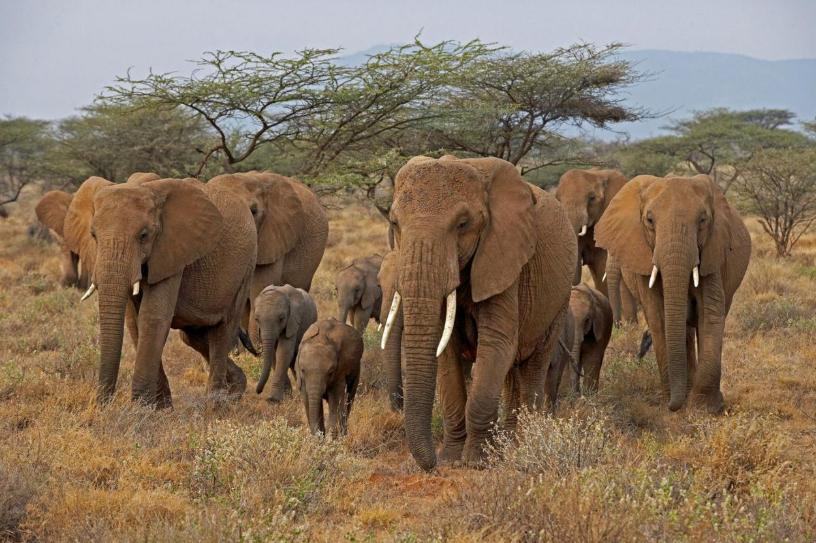
An elephant's trunk is one of the most remarkable tools in the animal kingdom, but learning to use it takes time. Although elephant calves are born with a fully formed trunk, they are not able to control it with precision during their first months of life. Like a human baby learning to use its hands, young elephants must practice every day to master this incredible organ.

At first, a calf's trunk may swing awkwardly or even get in the way while walking. It often experiments by touching the ground, picking up leaves, splashing water, or reaching toward its mother. These early attempts help strengthen the muscles and improve coordination over time.

Young elephants learn not only through practice but also by observing their mothers and other experienced members of the herd. They watch how adults use their trunks to gather food, drink water, communicate, greet one another, and even comfort family members. By copying these behaviors, calves gradually develop the skills they need for everyday life.

As they grow older, elephant calves become increasingly skilled at using their trunks to grasp branches, pull up grasses, dust themselves with soil, and spray water over their bodies to stay cool. Their trunk also plays an important role in social interactions, allowing them to explore their surroundings and strengthen bonds with other elephants.

Every new skill an elephant calf learns contributes to its survival and independence. Protecting elephant families and their natural habitats ensures that young elephants have the opportunity to grow, learn, and thrive alongside the herds that teach them life's most important lessons.
