
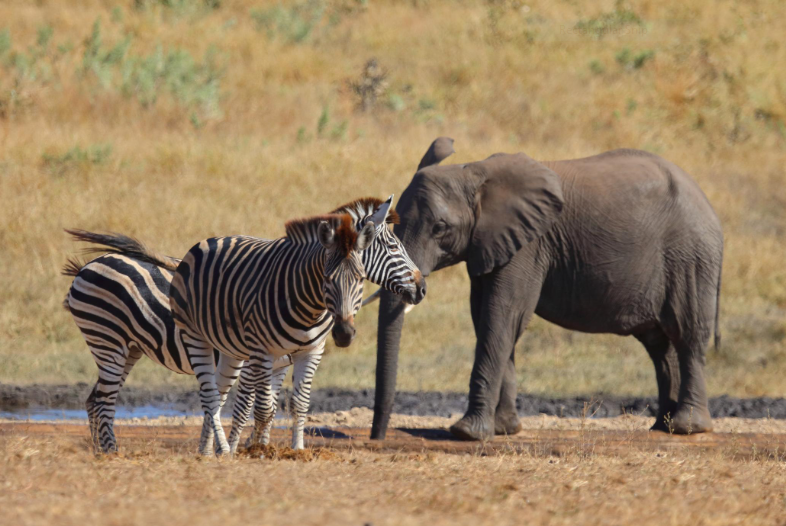
Elephants share their habitats with a wide variety of animals, from tiny birds and insects to large predators and other herbivores. Throughout their lives, they regularly encounter unfamiliar creatures, and their responses are shaped by curiosity, experience, caution, and the situation at hand.

One of the first ways elephants assess an unfamiliar animal is through their remarkable senses. Their keen sense of smell, excellent hearing, and sensitive trunks help them gather information before deciding how to react. They may pause, raise their heads, spread their ears, or extend their trunks to investigate from a safe distance.

Curiosity is especially common among younger elephants. Calves and juveniles often observe unfamiliar animals closely, sometimes approaching with cautious interest while remaining near the protection of the herd. Older elephants, however, are generally more measured in their responses, relying on years of experience to judge whether an encounter presents any real threat.

Not every unfamiliar animal is viewed as dangerous. Many birds, antelope, zebras, and other peaceful species can move freely near elephants without causing concern. In many ecosystems, different animals even benefit from sharing the same habitats, often feeding or traveling through the same landscapes at different times.

When elephants encounter potential predators such as lions, they become far more alert. Adults may gather calves into the center of the group while larger elephants position themselves around the outside in a protective formation. Loud trumpeting, ear spreading, mock charges, or coordinated group movements can discourage predators from approaching.

Elephants also respond carefully to unfamiliar sounds and scents. A strange call, an unusual odor carried by the wind, or unexpected movement in dense vegetation may prompt the herd to stop, investigate, or quietly change direction until the source has been identified.

Scientific research continues to reveal just how adaptable elephants are when interacting with other wildlife. Their ability to assess risks, communicate with one another, and make collective decisions demonstrates the intelligence and cooperation that help them thrive in complex natural environments.

At Elephant Rise, we believe every encounter in the wild highlights the remarkable awareness and social intelligence of elephants. By protecting healthy ecosystems where wildlife can coexist naturally, we help ensure that elephants continue to navigate their world with the wisdom that has sustained them for countless generations.