
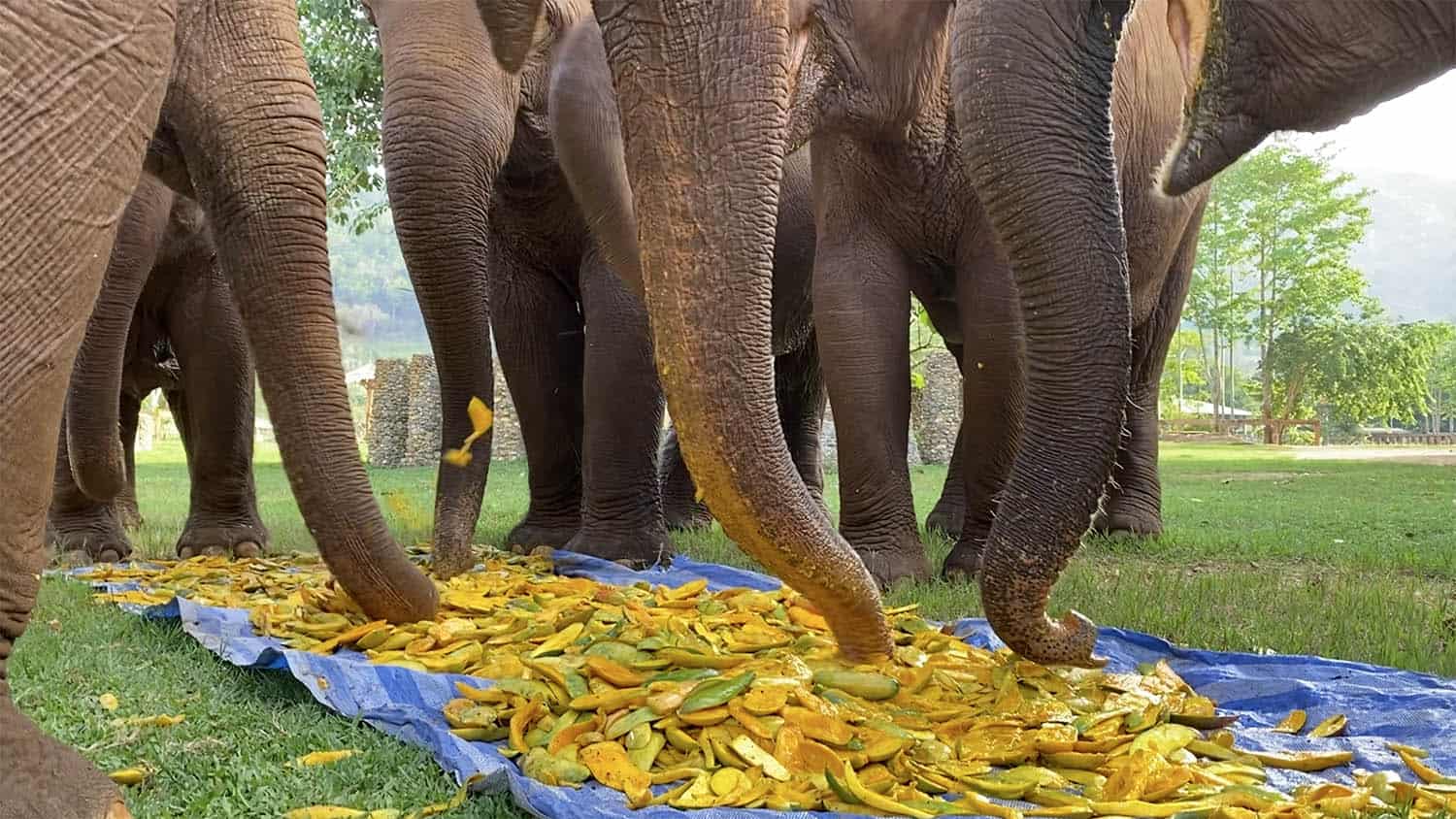
Caring for rescued elephants begins long before a meal reaches the herd. Behind each basket of fruit and every bundle of fresh grass is a careful daily routine shaped by patience, teamwork, and close attention to each elephant’s well-being.
As the world’s largest land herbivores, elephants consume substantial quantities of vegetation and spend much of their natural day grazing and foraging. Their digestive systems process large volumes of plant matter but absorb only about 40 percent of its nutrients. The remaining fibre returns to the land as nutrient-rich dung, supporting the soil and continuing an important natural cycle.

At a large sanctuary caring for more than 100 elephants, feeding the herds requires several tons of produce each day. Bananas, pumpkins, cucumbers, mangoes, pineapples, melons, corn, and watermelons arrive from nearby farms, villages, and hill-tribe communities. Fresh grass and corn stalks are also delivered in large quantities, helping to provide the fibre that elephants need.
This work also creates a meaningful connection between elephant care and surrounding communities. Every delivery represents a wider network of farmers, local families, sanctuary workers, and supporters contributing to the elephants’ daily nourishment.

Inside the elephant kitchen, staff members and volunteers wash, inspect, sort, peel, and chop the food. Although these tasks may appear simple, every step matters. Produce must be clean and suitable, portions must be prepared thoughtfully, and the needs of individual elephants must always come first.
Many rescued elephants are elderly or live with lasting health problems following years of hardship. Elephants whose teeth have become worn may struggle to chew coarse plants or firm produce. For them, softer meals are prepared, while grass and corn stalks can be shredded into smaller pieces to make eating and digestion easier and to reduce the risk of constipation.
Food preferences also vary from one elephant to another. Effective care therefore depends on observation and familiarity. By understanding how an elephant eats, what she enjoys, and what her body can comfortably manage, caregivers can prepare meals that support both physical health and emotional comfort.

An elephant kitchen is more than a place where food is processed. It is a shared space where people from different backgrounds work together with a common purpose. Volunteers contribute alongside experienced staff, transforming demanding physical work into a compassionate daily practice.
Each prepared basket carries more than nourishment. For an elephant recovering from exploitation, injury, or neglect, reliable access to appropriate food can help restore a sense of comfort and security. A carefully prepared meal respects the elephant as an individual and affirms that her needs deserve attention.

This essential work is made possible by dedicated caregivers, volunteers, local food producers, and visitors whose support helps sanctuaries continue providing responsible care. Their combined efforts ensure that rescued elephants receive not only enough to eat, but food prepared with consideration for their age, health, and history.
At Elephant Rise, we believe that conservation is expressed through everyday actions. Washing fruit, cutting pumpkins, shredding grass, and carrying a basket to an elephant may seem ordinary, yet together these acts form part of a much larger promise: that elephants who have endured difficult lives can move forward surrounded by dignity, kindness, and hope.