
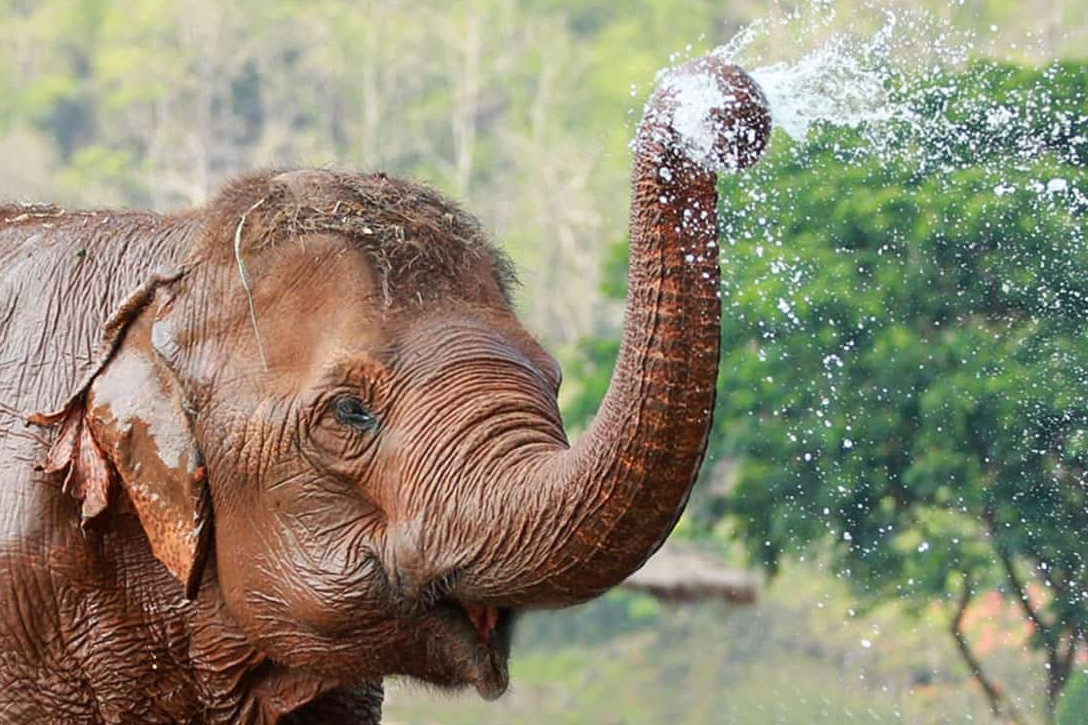

An elephant can use its trunk to pull vegetation from the ground, move heavy branches and gather food. Yet the same powerful structure can carefully lift an object as small as a grape. This remarkable precision is supported by the finger-like projection at the tip: Asian elephants have one, while African elephants have two.

The trunk is also essential to everyday survival. It helps elephants grasp food, draw up water and spray their bodies. When swimming, elephants can raise their trunks above the surface and use them like snorkels, allowing them to breathe while moving through deeper water.

Smell is another vital part of the trunk’s role. Through this highly developed sense, elephants can search for food and water and identify the individual scents of family members. Their trunks help them understand the environment and remain connected to the herd.

Beyond its practical uses, the trunk is a gentle instrument of communication. Elephants reach toward one another to greet, guide, reassure and offer comfort. A soft touch can strengthen bonds, calm a companion or express the quiet closeness that lies at the heart of elephant society.

For Elephant Rise, the trunk reflects the elephant as a whole: strong yet sensitive, highly intelligent and deeply responsive to others. Protecting elephants means protecting their freedom to explore, communicate and form relationships through the natural behaviors that make their lives so rich.

Every trunk raised to investigate the air, gather food or touch a trusted companion reminds us of what is at stake. By safeguarding elephants and the habitats they depend upon, we help ensure that these extraordinary expressions of strength, curiosity and connection continue for generations to come.