
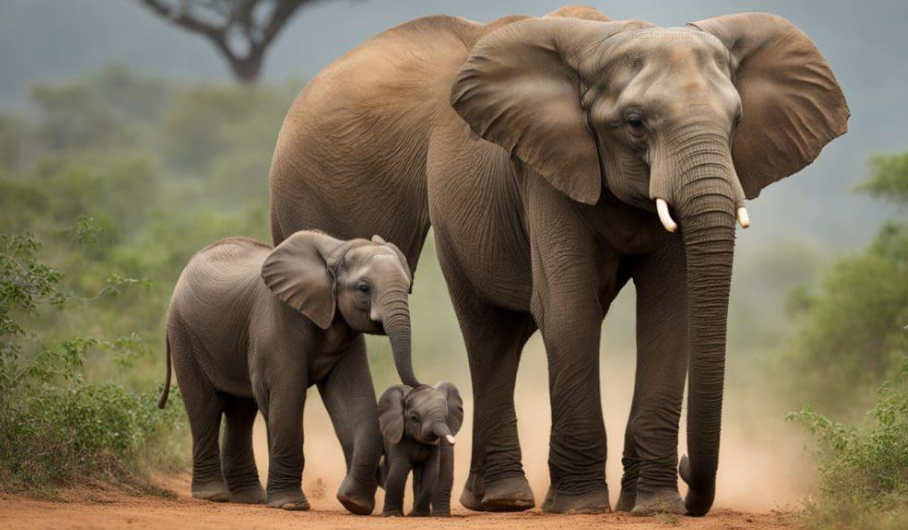

Elephants are among the longest-living land mammals, with many individuals living 60 to 70 years in the wild when they have access to healthy habitats and are protected from human threats. Like humans, their lifespan depends on factors such as nutrition, health, genetics, and the environment.

During their early years, elephant calves rely entirely on the care of their mothers and other females in the herd. As they grow, they learn essential survival skills, including finding food, locating water, recognizing family members, and navigating migration routes. This knowledge is passed down through generations and contributes to the long-term survival of elephant families.

As elephants age, physical changes become more noticeable. Their teeth gradually wear down after decades of chewing tough vegetation. Because elephants replace their molars only a limited number of times throughout their lives, very old elephants may struggle to eat enough food once their final set of teeth has worn away. This natural process is one of the main factors that limits their lifespan.

Although elephants can live for many decades, their lives are increasingly threatened by habitat loss, human–wildlife conflict, and poaching. Protecting elephant habitats and ensuring safe migration routes help more elephants reach old age and continue passing their knowledge to future generations.

![코뿔소, 멸종 위기도 서러운데 뿔마저 짧아졌다 [사이언스카페] : 네이트 뉴스](https://images.openai.com/static-rsc-4/g9ghsyaGzOWxILAQKLQDrpa0cpnK6sm7U2tz3SXLh0MYpUGAlW1V1bEPHtuL-IKeuAvteUN1jmmp9L58GpgUeAkwB-COLHicUH36S2AGo4e8ayUEBP77V-vJNeb3vO3yYOmnBC-DIK7o8c7y4h9KwiAWtL_6jnhhQG6Zu_sa6JylCtsaCUEya6SZ0rsMqYSs?purpose=fullsize)