
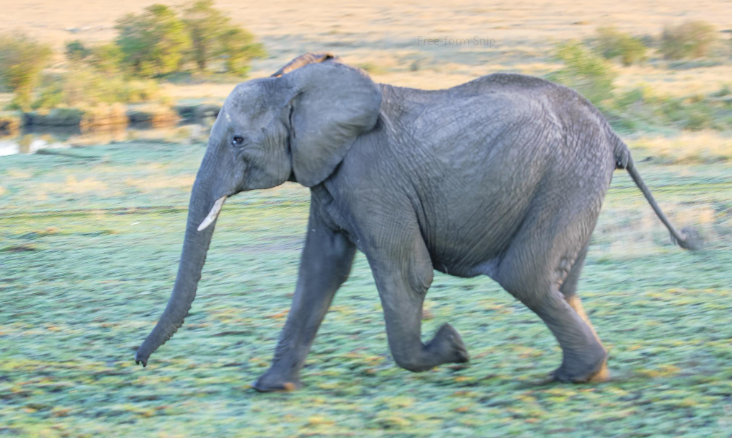
Elephant footprints may look like simple marks in the soil, but they can reveal a surprising amount of information. For scientists and conservation teams, each track offers clues about an elephant’s size, age, direction of travel, and recent activity. A large, deep footprint may belong to an adult, while smaller prints nearby can indicate that calves are traveling with the herd.

The shape and condition of a footprint can also help researchers understand movement patterns. Fresh tracks with clear edges may show that elephants passed through only recently, while older prints become softened by wind, rain, and other animals. By following a series of tracks, field teams can identify frequently used pathways, migration corridors, feeding areas, and routes leading to water.

Footprints may also provide valuable information about elephant health. An uneven walking pattern, dragging marks, or an unusual impression can suggest an injury to the foot or leg. Because elephants depend on their feet to travel long distances, detecting these signs can be especially important in protected areas where wildlife teams monitor vulnerable animals.

Researchers can measure and photograph tracks without approaching the elephants themselves. This allows them to study wild herds with minimal disturbance. When combined with camera traps, dung analysis, and GPS tracking, footprint records help create a clearer picture of how elephants use their landscape.

Every footprint is part of a larger story. By learning to read these quiet signs, scientists can better protect migration routes, identify important habitats, and understand the daily lives of elephants without interrupting their natural behavior.
