
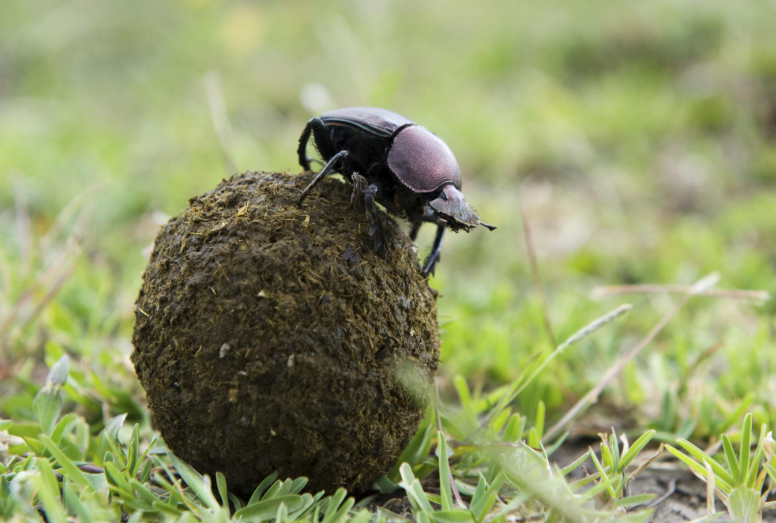
Elephant dung may seem like simple waste, but for dung beetles, it is an essential resource that supports their entire life cycle. These small but hardworking insects play a vital role in keeping ecosystems healthy by quickly breaking down elephant dung and returning valuable nutrients to the soil.

As soon as an elephant leaves behind fresh dung, dung beetles are often among the first animals to arrive. Some species roll small balls of dung away to bury as food or as a safe place to lay their eggs. Others tunnel directly beneath the dung pile, pulling organic material underground where it enriches the soil. This natural recycling process helps improve soil fertility, promotes plant growth, and reduces waste in the environment.

Dung beetles also provide important ecological benefits beyond nutrient recycling. By burying dung, they help control flies and parasites that would otherwise breed in animal waste. Their tunneling activity improves soil aeration and allows rainwater to penetrate more easily, creating healthier conditions for grasses, trees, and other plants that many wildlife species depend on.

Without elephants, many dung beetle species would lose one of their primary food sources. Likewise, without dung beetles, elephant habitats would become less healthy and less productive. This remarkable partnership demonstrates how even the smallest creatures contribute to the balance of nature. Every elephant dropping becomes the beginning of a new cycle of life, supporting insects, enriching the soil, and sustaining the ecosystems that countless animals call home.
