
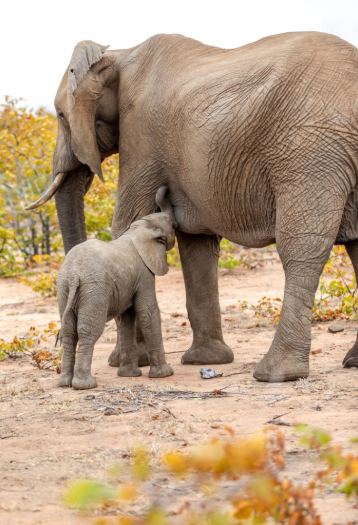
A baby elephant is called a calf, the same term used for the young of several other large mammals, including whales, giraffes, and cattle. From the moment a calf is born, it becomes the center of attention within the herd, where its mother and other female elephants work together to keep it safe.

Elephant calves are born after an exceptionally long pregnancy of about 22 months, the longest gestation of any land mammal. At birth, they typically weigh between 90 and 120 kilograms (200–265 pounds) and can stand within an hour. Although they are surprisingly strong, calves remain closely dependent on their mothers for nourishment, protection, and guidance.

The bond between a mother elephant and her calf is one of the strongest in the animal kingdom. Calves nurse for several years while gradually learning essential skills such as finding food, recognizing family members, communicating through sounds and body language, and navigating their surroundings. Other experienced females in the herd, often called "allomothers" or "aunties," also help care for and protect the young.

Play is an important part of a calf's development. Young elephants spend time running, splashing in water, chasing one another, and practicing the behaviors they will need as adults. These playful moments strengthen social bonds and help calves build confidence.

Because elephants reproduce slowly and invest so much care in raising each calf, every birth is valuable for the future of the species. Protecting elephant habitats and ensuring safe environments for mothers and calves are essential steps in conserving these remarkable animals for generations to come.
