
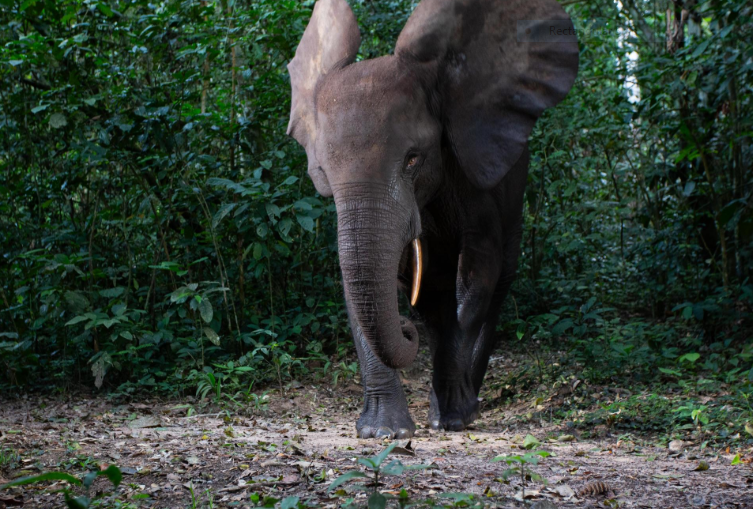
African forest elephants (Loxodonta cyclotis) are among the most elusive large mammals on Earth. Unlike their relatives that roam open savannas, the elephants spend their lives deep within the dense rainforests of Central and West Africa, making them incredibly challenging for scientists to observe and understand.

The thick forest canopy limits visibility, often allowing researchers to see only a few meters ahead. Forest elephants can move quietly through dense vegetation, leaving little trace of their presence. As a result, traditional wildlife surveys that work well in open landscapes are far less effective in rainforest environments.

To overcome these challenges, conservationists rely on innovative research methods. Camera traps, GPS tracking collars, acoustic monitoring, and DNA collected from elephant dung all provide valuable insights into their movements, population size, and behavior without disturbing the animals. These technologies have greatly expanded our understanding of a species that was once largely hidden from view.
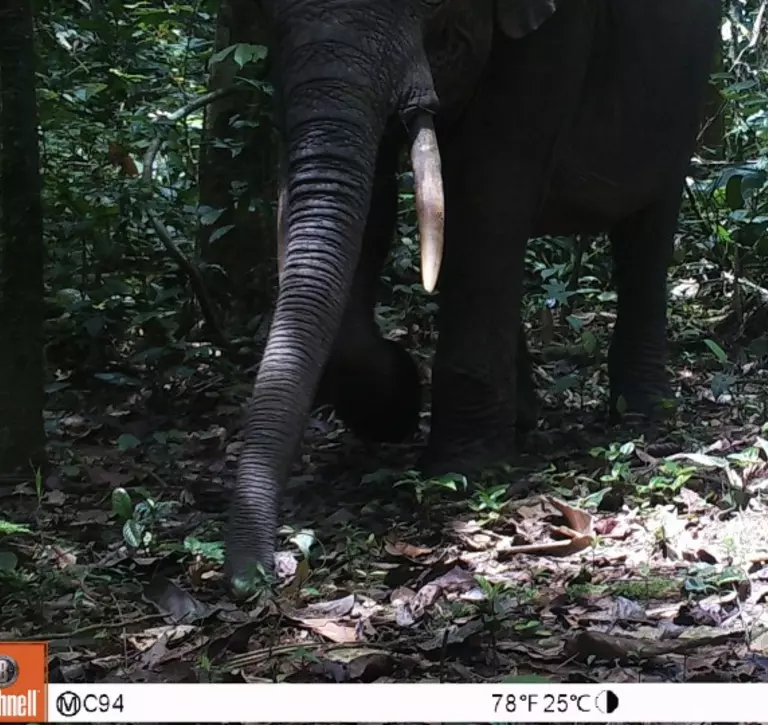
Studying African forest elephants is essential because they play a critical role in maintaining healthy rainforest ecosystems. By dispersing seeds over long distances and creating natural pathways through dense vegetation, they help forests regenerate and support countless other plant and animal species.

Despite advances in research, much remains to be discovered about these remarkable elephants. Continued scientific study is vital for developing effective conservation strategies and ensuring their long-term survival in the face of habitat loss, poaching, and climate change.

At Elephant Rise, we believe that every new discovery brings us one step closer to protecting these extraordinary animals. By supporting research and conserving the forests they call home, we can help secure a future where African forest elephants continue to thrive alongside the rich biodiversity they sustain.