
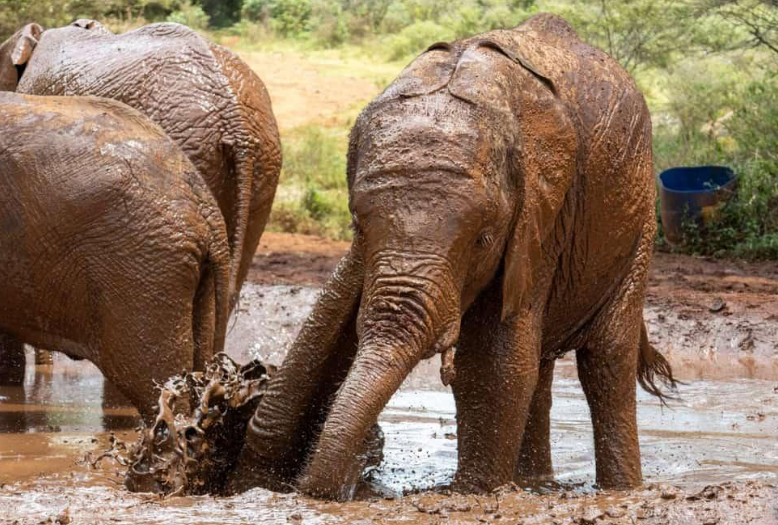
Few sights capture the playful spirit of elephants quite like a herd gathering around a muddy pool. Adults spray themselves with their trunks, calves slide into the soft earth, and family members rub against one another beneath a coating of wet soil. Yet mud bathing is far more than a moment of enjoyment. It is an essential part of how elephants care for their bodies and cope with life in warm environments.

One of the main reasons elephants seek out mud is to stay cool. Their enormous bodies produce and retain a great deal of heat, while their ability to sweat is limited. By covering their skin with cool, wet mud, elephants can lower their body temperature. The moisture trapped in the mud evaporates gradually, providing relief long after they have left the waterhole.

Elephant skin may look tough, but it is surprisingly sensitive. Prolonged exposure to intense sunlight can cause discomfort and even sunburn. Once dried, a layer of mud forms a natural protective coating that reduces direct exposure to the sun. Elephants often strengthen this barrier by throwing dust or dry soil over themselves after bathing.
Mud also helps protect elephants from biting insects and parasites. Flies, mosquitoes, ticks, and other small pests can irritate areas where the skin is thinner, including around the ears, eyes, mouth, and belly. A coating of mud makes it more difficult for these insects to reach the skin and may help reduce irritation. Wildlife experts have observed elephants using water, mud, and dust as part of their regular protection against sunlight and biting insects. (San Diego Zoo Animals)

The deep wrinkles in an elephant’s skin make mud bathing especially effective. These folds hold water and wet soil against the body, allowing moisture to remain for longer than it would on a smooth surface. As elephants walk away from a pool, the mud stays within the creases, continuing to cool and protect them.
Mud baths can also help with skin care. As the mud dries, elephants may rub their bodies against trees, rocks, or the ground. This can remove loose skin, dirt, and external parasites. The process acts like a natural cleansing and exfoliating treatment, using materials found within the elephant’s own habitat.

For calves, muddy pools are places of both learning and play. Young elephants watch older family members scoop mud with their trunks, splash their bodies, and roll on the ground. At first, a calf may struggle to control its trunk or lose its footing in the slippery mud. With practice, it learns a behavior that will remain important throughout its life. ElephantVoices notes that mud splashing is practiced by elephants of all ages and sexes but requires coordination that must be learned and refined. (Elephant Voices)

Mud bathing is often a social experience as well. Family members may enter a pool together, splash one another, or stand close while resting and cooling down. These peaceful gatherings provide opportunities for calves to play and for the herd to maintain its close social bonds.

Access to mud depends on access to water. During dry seasons, elephants may travel considerable distances to reach rivers, wetlands, springs, and temporary pools. These places are therefore much more than drinking sites. They are essential spaces where elephants can cool themselves, care for their skin, rest, and interact with their families.

The simple joy of an elephant rolling in mud reveals how closely its well-being is connected to the landscape. A muddy pool offers protection from heat, sunlight, insects, and skin irritation while also providing a place for learning and companionship.
Protecting elephants therefore means protecting the rivers, wetlands, waterholes, and migration routes on which they depend. When these natural places remain healthy and connected, elephants can continue the ancient routines that have helped them survive for generations. In every muddy footprint, we are reminded that caring for wildlife begins with caring for the habitats that sustain it.