
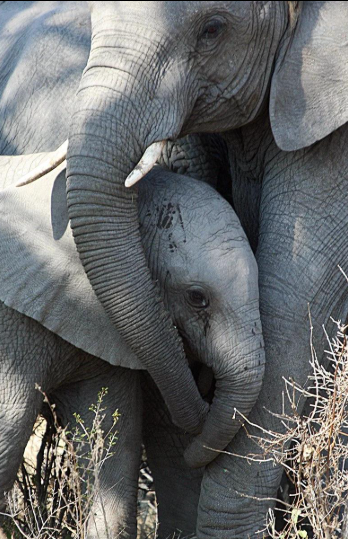
From the moment they are born, elephant calves rarely stray far from their mothers. This close bond is essential for their survival, providing the young elephants with nourishment, protection, guidance, and emotional security during their early years.

In the first months of life, calves depend entirely on their mother's milk for nutrition. Staying close allows them to nurse whenever needed while remaining safe within the protective circle of the herd. A mother's presence also helps shield her calf from potential dangers, including predators and unfamiliar threats in the environment.

As elephant calves grow, they continue to rely on their mothers for much more than food. By observing her daily activities, they learn how to use their trunks, find water, choose safe plants to eat, and communicate with other elephants. Every journey becomes an opportunity to develop the skills they will need throughout adulthood.

The relationship between a mother and her calf is strengthened by constant physical contact. Calves often touch their mothers with their trunks, walk beneath or beside them, and seek reassurance whenever they feel uncertain. Other experienced females in the herd also help care for the young, creating a supportive family network that contributes to the calf's healthy development.

Although young elephants gradually become more independent, they remain closely connected to their families for many years. This strong social bond is one of the reasons elephants have become known for their remarkable intelligence, cooperation, and compassion. Protecting elephant families and their natural habitats helps ensure that every calf has the opportunity to grow in the safety and support of its herd.
