
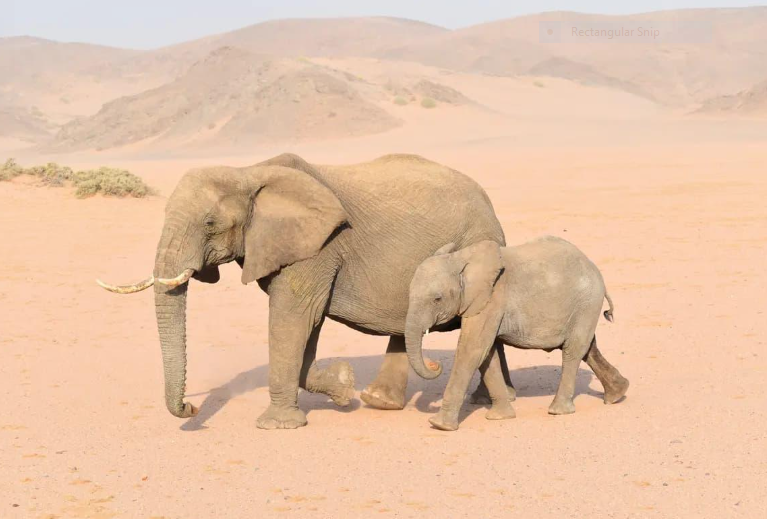
Yes, some elephants can survive in deserts, but they have developed remarkable adaptations to thrive in these harsh environments. Desert elephants, found mainly in Namibia and parts of Mali, are not a separate species. Instead, they are African elephants that have adapted their behavior to cope with extreme heat, limited water, and scarce vegetation.

Unlike elephants living in forests or lush savannas, desert elephants travel much greater distances in search of food and water. They may walk dozens of kilometers each day, relying on their excellent memory to locate seasonal rivers, hidden waterholes, and areas where vegetation is still available. Experienced matriarchs play a vital role in guiding their herds through these challenging landscapes.

Desert elephants also adjust their daily routines to avoid the hottest part of the day. They often feed during the cooler morning and evening hours and rest in the shade whenever possible. Their broad feet help them walk across soft sand, while their trunks allow them to dig into dry riverbeds to uncover underground water. These impressive survival skills enable them to endure conditions that would be difficult for many other large mammals.

Despite their resilience, desert elephants face growing threats from climate change, prolonged droughts, and habitat loss. Conserving their fragile desert ecosystems is essential to ensure they continue to survive in one of the world's most demanding environments. Their ability to adapt reminds us of the incredible intelligence and resilience of elephants, while also highlighting the importance of protecting the unique habitats they call home.
