
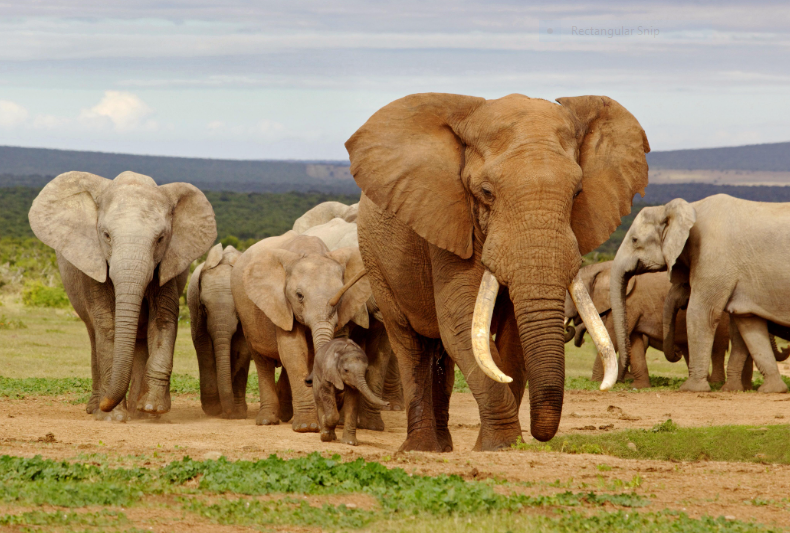

Elephants live in close-knit family groups built on strong social bonds and cooperation. At the heart of every family is the matriarch—the oldest and most experienced female. Her knowledge and leadership are essential to the survival and well-being of the entire herd.

A typical elephant family consists of the matriarch, her daughters, sisters, and their calves. These family members remain together for many years, forming lifelong relationships. Young males usually leave the herd during their teenage years and either live alone or join small groups of other males, while females stay with their birth family throughout their lives.

The matriarch leads the herd to food and water, chooses safe travel routes, and helps the family avoid danger. Her decisions are based on decades of experience, allowing her to remember seasonal migration paths, reliable water sources, and areas where threats may exist. During droughts or difficult conditions, her memory can make the difference between survival and loss.

Beyond guiding the herd, the matriarch also plays an important social role. She helps maintain harmony within the family, responds to threats, and cares for young calves alongside other adult females. This shared care, known as allomothering, allows calves to learn important skills while giving mothers time to feed and rest.
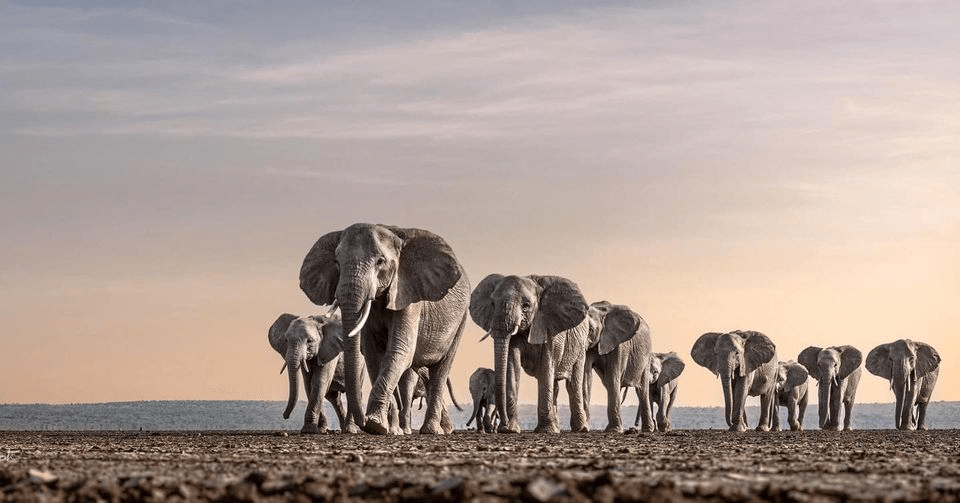
Communication is another key part of elephant society. Family members stay connected through gentle touches, body language, low-frequency rumbles, and even vibrations that travel through the ground. The matriarch often initiates movements and signals that keep the herd together as they travel across large landscapes.

The loss of a matriarch can have lasting effects on an elephant family. Without her experience, younger elephants may struggle to find food, navigate migration routes, or respond effectively to danger. Protecting older females is therefore vital not only for individual herds but also for the long-term survival of elephant populations.

Strong family bonds, shared knowledge, and experienced leadership have helped elephants thrive for thousands of years. By safeguarding elephant families and the habitats they depend on, we help preserve one of nature's most remarkable social societies.
