
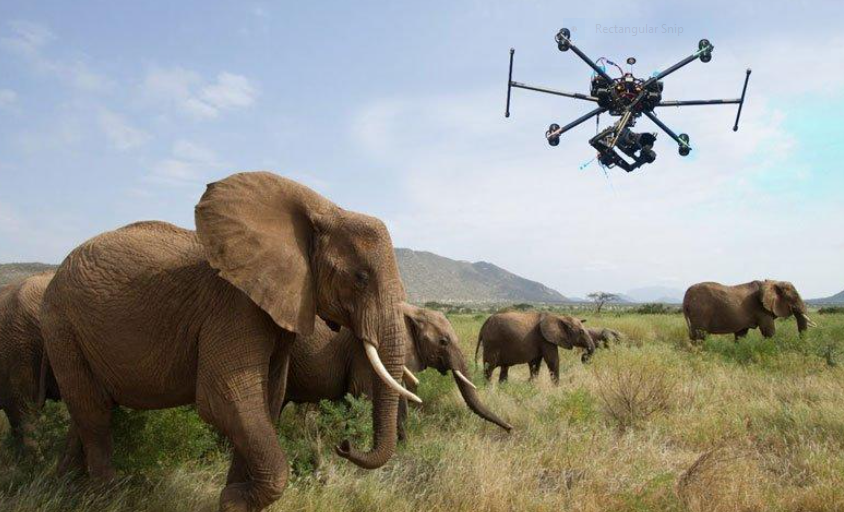
Drones have become an important tool in modern elephant conservation because they allow scientists and wildlife rangers to monitor elephants safely and efficiently from the air. Equipped with high-resolution cameras, GPS, and thermal imaging sensors, drones can quickly survey large areas that would otherwise take days to cover on foot.

They help researchers count elephant populations, track herd movements, identify important habitats, and detect changes in the environment. Since drones can collect data without getting too close to the animals, they reduce disturbance and provide a safer alternative to traditional ground surveys. Recent studies show that elephants can become accustomed to carefully operated drones, making them an effective and minimally invasive monitoring tool.

Drones also play a key role in protecting elephants from threats such as poaching and human–elephant conflict. Rangers can use real-time aerial footage to patrol remote areas, detect illegal activities, and respond more quickly to emergencies. In regions where elephants frequently approach farms or villages, drones help monitor their movements and provide early warnings to local communities, reducing the risk of dangerous encounters. Thermal cameras are especially useful during the night, allowing conservation teams to locate elephants even in dense vegetation or low-light conditions.

As drone technology continues to improve, it is becoming an increasingly valuable part of wildlife conservation. Combined with satellite tracking, artificial intelligence, and field research, drones provide scientists with detailed information that supports better habitat management and long-term conservation planning.

By helping protect elephants while minimizing disturbance to their natural behavior, drones are giving conservationists new opportunities to safeguard these magnificent animals and the ecosystems they depend on.
