
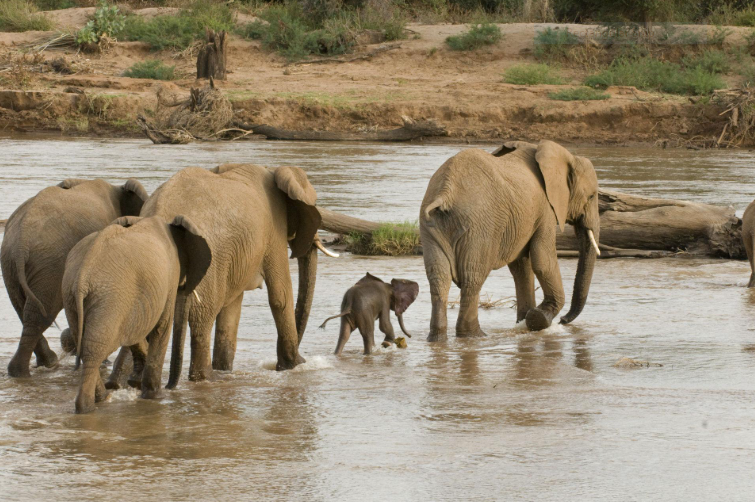
Elephants often travel long distances in search of food and water, and crossing rivers is an important part of their journey. However, rivers can present hidden dangers, including strong currents, steep banks, and predators such as crocodiles. To stay safe, elephants rely on their intelligence, experience, and strong family cooperation when choosing where and when to cross.

The oldest female in the herd, known as the matriarch, usually leads the way. Drawing on years of experience, she remembers reliable crossing points that have been used by generations of elephants. Before entering the water, she may pause to observe the river, checking the current, water depth, and surrounding environment for potential threats. If conditions appear unsafe, the herd will often wait or look for another crossing.

When it is time to cross, adult elephants position themselves around the youngest calves to keep them safe. Larger elephants help shield the calves from the current, while older siblings and other females stay close to ensure that no one becomes separated. If the water is deep, elephants use their trunks like snorkels, allowing them to breathe while swimming across.

Safe river crossings are not only a sign of elephant intelligence but also a reflection of their strong social bonds. Every crossing requires communication, trust, and teamwork. By protecting natural migration routes and healthy river ecosystems, conservation efforts help ensure that elephant families can continue these remarkable journeys safely, just as they have for countless generations.
