
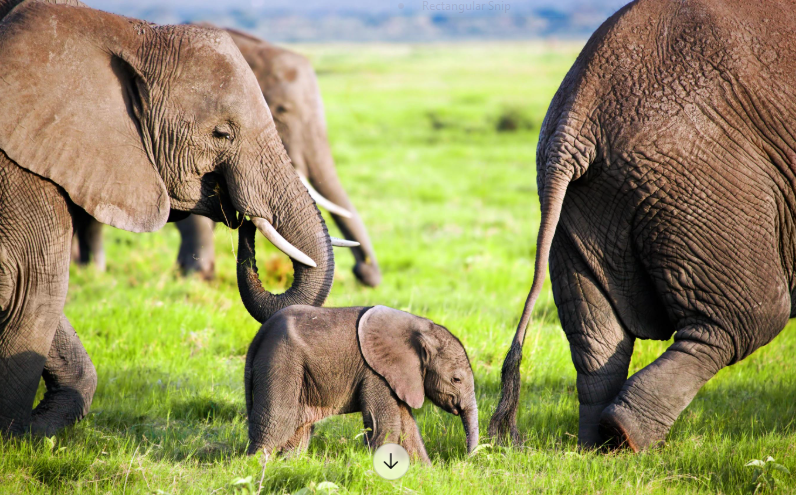

Elephants have one of the longest childhoods in the animal kingdom. From birth to adulthood, they spend many years growing, learning, and developing the skills needed to survive in the wild.
A Strong Start to Life

After a pregnancy of about 22 months, a calf is born weighing around 90–120 kilograms (200–265 pounds). Within an hour, it can usually stand and begin nursing, but it depends entirely on its mother for food and protection.
Learning Every Day

Young elephants spend their early years mastering the use of their trunks. They learn how to drink, gather food, communicate, and explore their surroundings by watching older members of the herd.
Play is also an important part of growing up. Running, splashing in water, and wrestling with other calves help develop strength, coordination, and social skills.
Growing with the Herd

Elephant calves are raised by the whole family. Mothers, aunts, and older sisters all help care for and protect the young. As calves grow, they gradually eat more plants while continuing to learn where to find food and water.
Becoming an Adult

As elephants mature, males and females follow different paths. Females usually remain with their family herd throughout life, while young males eventually leave to live alone or with other males before reaching full adulthood.
Elephants continue growing for many years. Adult males are generally much larger than females and may keep gaining size well into their twenties.
Why a Long Childhood Matters

A long childhood gives elephants time to build strong social bonds and learn from experienced adults. They remember migration routes, water sources, and safe feeding areas—knowledge that helps them survive throughout their lives.
Growing from a tiny calf into one of the world's largest land animals is a slow journey, but every stage prepares an elephant for a healthy and successful life in the wild.
