
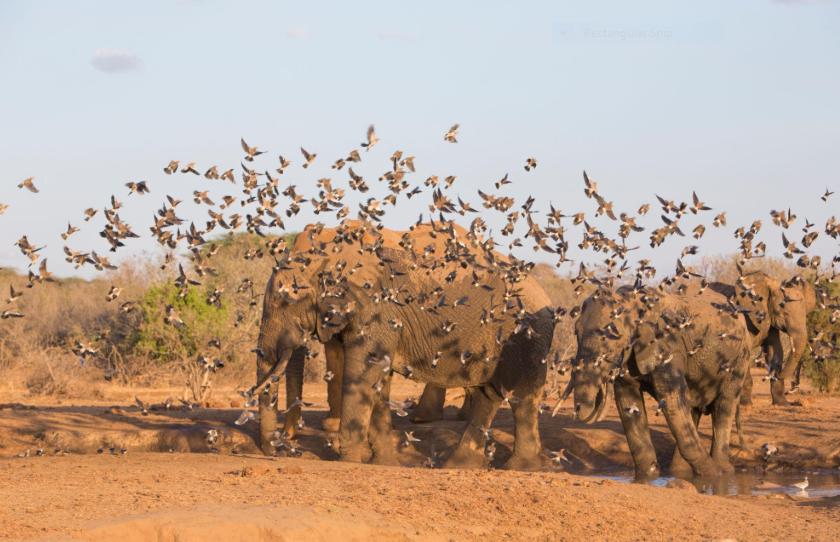
Elephants are often called ecosystem engineers because their everyday activities help countless other animals survive, even though they are completely unaware of the impact they have. Simply by living their natural lives, elephants create opportunities that benefit an entire ecosystem.

As elephants travel through forests and grasslands, they push over small trees, break thick branches, and open pathways through dense vegetation. These clearings allow sunlight to reach the ground, encouraging the growth of grasses, flowers, and young plants that provide food for antelope, zebras, rabbits, and many other herbivores.

Elephants also play an important role in creating access to water. During dry seasons, they dig into sandy riverbeds with their trunks and feet to uncover underground water. Once a waterhole is opened, birds, mammals, reptiles, and insects all gather to drink, benefiting from the elephants' hard work.

Their dung is another valuable resource. Elephant dung contains undigested seeds that can grow into new plants, while also providing food and shelter for dung beetles, butterflies, fungi, and other small organisms. In this way, elephants help forests regenerate and support entire food webs.
Even the trails elephants create become natural highways for wildlife. Many animals use these paths to travel safely through dense forests or reach feeding areas and water sources with less effort.

Although elephants never intend to protect other species, their daily behaviors make them one of nature's greatest allies. By conserving elephants and the habitats they depend on, we also protect thousands of other plants and animals that quietly rely on these gentle giants every single day.