Elephants are often called "ecosystem engineers" because their daily activities help shape the landscapes they inhabit. As they move through forests, grasslands, and wetlands in search of food and water, they influence the lives of countless other plants and animals. Their impact extends far beyond their own survival, making them one of nature's most important species.

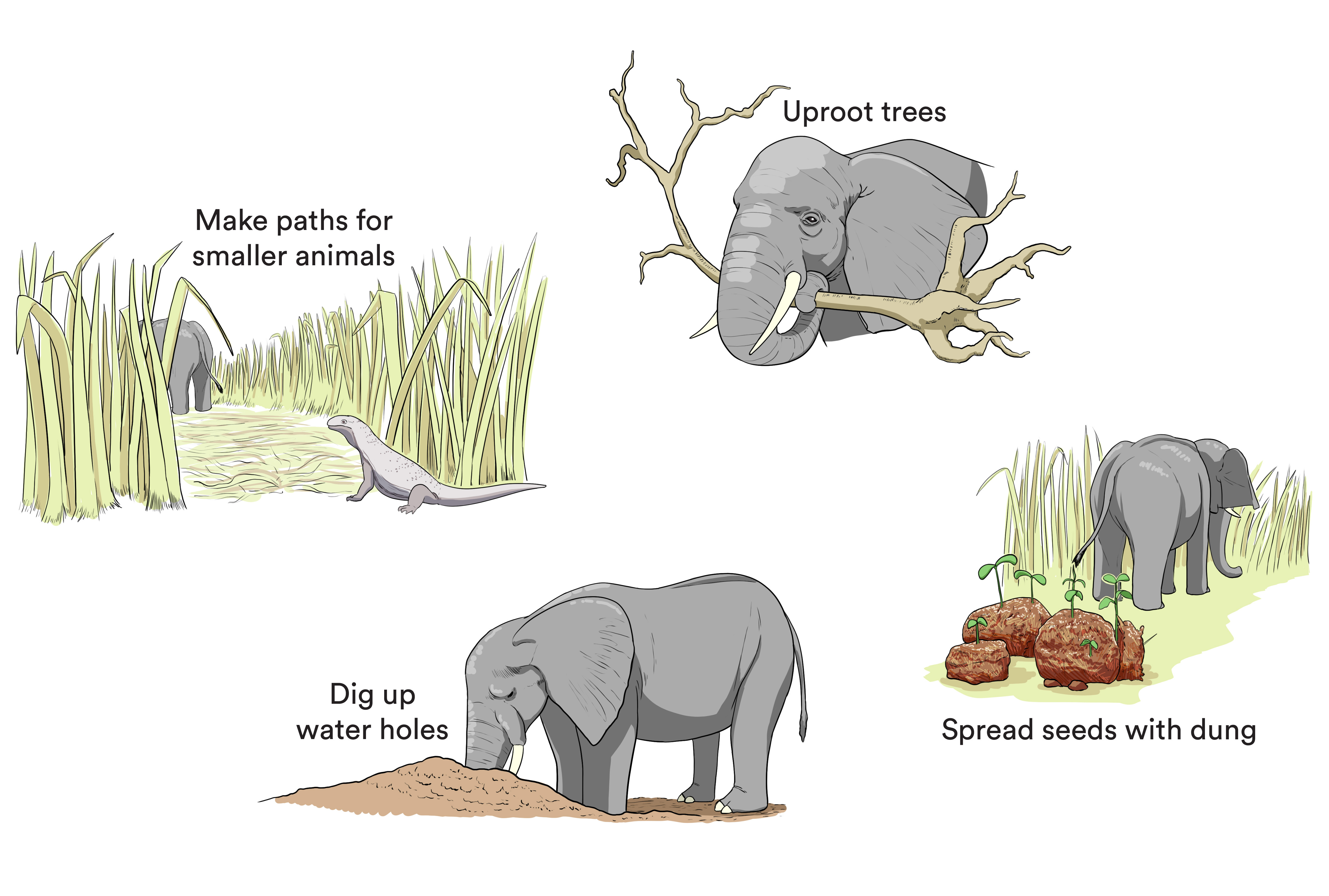
By feeding on trees, shrubs, and grasses, elephants naturally create openings in dense vegetation. These clearings allow sunlight to reach the forest floor, encouraging new plant growth that supports insects, birds, and grazing animals. At the same time, elephants disperse seeds over long distances through their dung, helping many plant species regenerate and increasing biodiversity across large areas. Their footprints can even collect rainwater, forming small pools that provide drinking water for frogs, insects, and other small wildlife during dry periods.

Elephants also help maintain healthy ecosystems by digging for underground water in dry riverbeds, creating access to water that many other animals rely on during droughts. Their constant movement forms natural pathways through forests, making it easier for other wildlife to travel and forage. Without elephants, many habitats would gradually change, reducing the diversity of plants and animals that depend on these ecological processes.

Protecting elephants means protecting entire ecosystems. When elephant populations remain healthy, forests continue to regenerate, grasslands stay balanced, and countless other species benefit from the environmental changes elephants create. Conserving these remarkable animals is not only about saving a single species—it is about preserving the health, resilience, and biodiversity of the natural world for generations to come.