
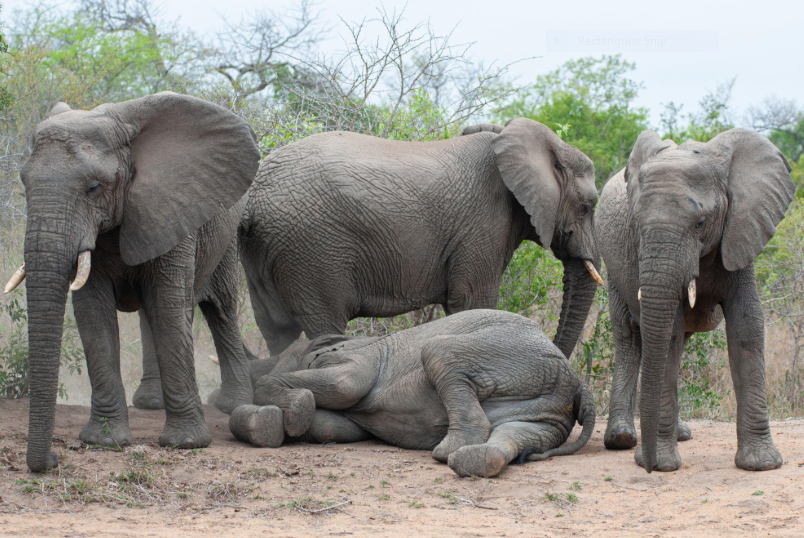
Elephants may be the largest land animals on Earth, but they still need to rest while remaining alert to potential dangers. In the wild, sleep is carefully balanced with the need to stay safe from threats and to continue searching for food and water. Their sleeping habits have evolved to help them survive in changing environments where awareness is essential.

Unlike many mammals, wild elephants sleep for only a few hours each day, often averaging around two to four hours. They usually rest during the night when temperatures are cooler and their surroundings are quieter. Most of their sleep is spent standing, which allows them to wake quickly and move if they sense danger. From time to time, elephants will lie down for deeper sleep, but they typically do so only when they feel secure and undisturbed.

Elephants rarely sleep alone. Family groups remain close together while resting, and adults often position themselves around younger calves to provide protection. This close formation allows the herd to respond quickly if predators or other threats approach. The strong social bonds within elephant families play an important role in keeping every member of the group safe.

Their excellent senses also help them rest with confidence. Elephants have remarkable hearing and can detect distant sounds, while their keen sense of smell allows them to recognize predators, other elephants, or changes in their surroundings. Even during periods of rest, they remain aware of what is happening nearby.
Because elephants must travel long distances to find food and water, they often sleep in different locations rather than returning to the same place every night. This flexible behavior helps them adapt to seasonal changes and reduces the likelihood of remaining in areas where resources are limited or danger is present.

Although elephants have developed effective ways to rest safely in the wild, habitat loss, human activity, and climate change are creating new challenges. Protecting natural habitats and allowing elephants to move freely across connected landscapes helps ensure they can continue their natural behaviors, including finding safe places to rest.
By safeguarding elephant habitats and supporting conservation efforts, Elephant Rise helps protect not only these remarkable animals but also the peaceful moments of rest that are essential to their health, survival, and the future of wild elephant populations.