
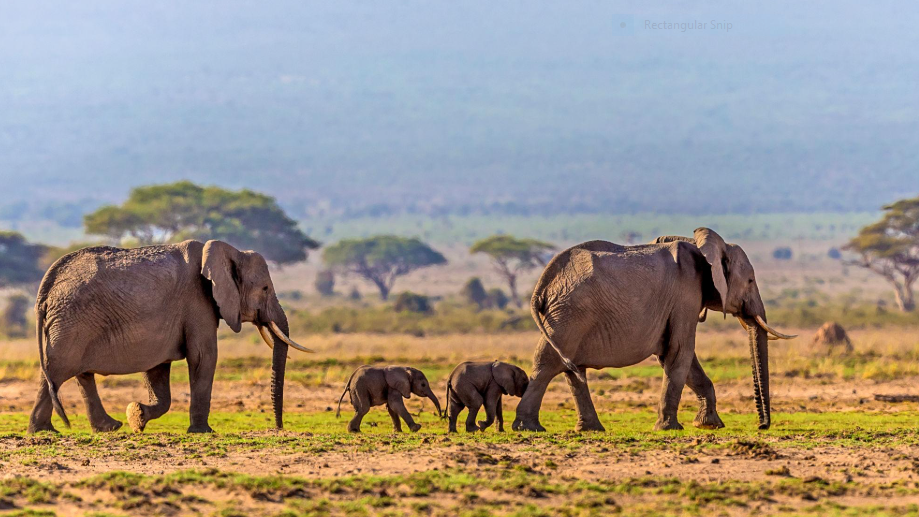
Elephants are widely regarded as one of the most intelligent animals on Earth. Alongside great apes, dolphins, and some whale species, they demonstrate remarkable abilities to learn, remember, solve problems, and build strong social relationships. Their intelligence has evolved over millions of years, helping them survive in complex environments where cooperation and experience are essential.
One of the clearest signs of elephant intelligence is their extraordinary memory. Wild elephants can remember the locations of water sources, migration routes, and safe feeding areas across landscapes that stretch for hundreds of kilometers. During periods of drought, experienced matriarchs often lead their families to waterholes they have not visited for many years. This remarkable ability can mean the difference between survival and hardship for the entire herd.
Elephants are also skilled problem solvers. Researchers have observed them moving logs, rolling large objects aside, or using branches to reach food that would otherwise be inaccessible. In controlled studies, elephants have even worked together to complete tasks that require cooperation, waiting for a partner before acting so both animals can succeed.
Another remarkable characteristic is their ability to learn from experience. Young elephants spend years observing their mothers, grandmothers, and other adult females. They gradually learn where to find food, how to recognize danger, when to migrate, and how to care for younger calves. This knowledge is passed from one generation to the next, creating a rich cultural tradition within elephant families.
Elephants also possess an impressive capacity for communication. They use a combination of vocal calls, body language, trunk touches, ear movements, and low-frequency rumbles that can travel over several kilometers. These different forms of communication help family members coordinate movements, warn one another of danger, strengthen social bonds, and reunite after becoming separated.
Perhaps one of the most touching aspects of elephant intelligence is their emotional awareness. Elephants comfort distressed companions by gently touching them with their trunks, standing close during stressful situations, or offering reassurance through calm vocalizations. They have been observed helping injured herd members, protecting vulnerable calves, and showing patience toward older elephants that struggle to keep pace with the group.
Scientists have also found evidence that elephants are capable of self-recognition. In mirror tests, some elephants have recognized that the reflection belongs to themselves rather than another animal. This rare ability, shared by only a small number of species, suggests a high level of self-awareness.
Play is another important sign of intelligence. Young elephants chase one another, wrestle gently with their trunks, splash in water, and experiment with objects in their environment. These playful activities help develop physical coordination, social skills, and problem-solving abilities that will be important throughout adulthood.
Their large brains also reflect their complex lives. The elephant brain is the largest of any land animal and contains an exceptionally developed cerebral cortex, a region associated with learning, memory, decision-making, and social behavior. While brain size alone does not determine intelligence, the sophisticated structure of the elephant brain supports the remarkable behaviors scientists observe in the wild.
The intelligence of elephants reminds us that they are far more than magnificent wildlife. They are thoughtful, social, and adaptable animals capable of learning, cooperating, remembering, and caring for one another throughout their lives.
Protecting elephants means protecting one of nature's greatest minds. By conserving their habitats and ensuring their families can continue to thrive in the wild, we help preserve not only an extraordinary species but also the rich social traditions and knowledge that have been passed from generation to generation for thousands of years.