
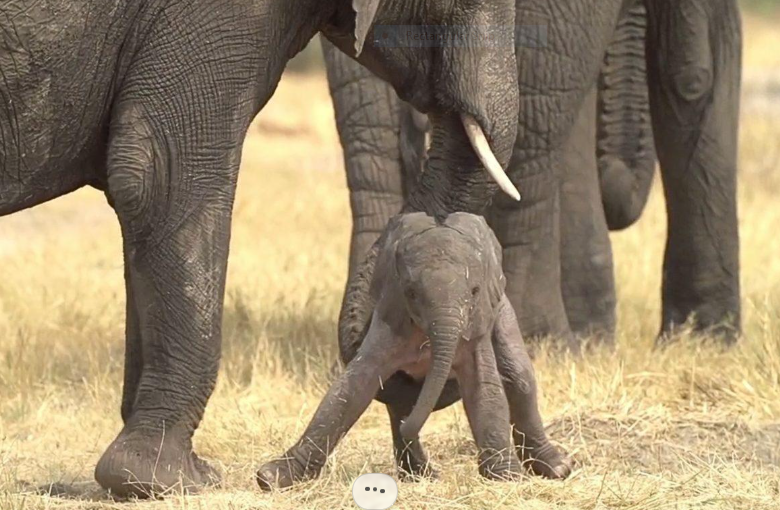
A newborn elephant is an impressive sight from the moment it enters the world. Despite being called a calf, a baby elephant is far larger than most newborn mammals, typically weighing between 90 and 120 kilograms (200–265 pounds) at birth. This substantial size gives the calf a strong start in life and helps it adapt to the challenges of living in the wild.

The calf's weight is the result of an extraordinary 22-month pregnancy, the longest gestation of any land mammal. During this time, the young elephant develops a well-formed brain, strong muscles, and the coordination needed to stand and walk soon after birth.

Within an hour of being born, most elephant calves are able to get to their feet. Although their first steps may be unsteady, they quickly learn to follow their mothers and remain safely within the protection of the herd. This early mobility is essential, as elephants are constantly on the move in search of food and water.

A newborn elephant relies entirely on its mother's milk for nourishment during the first months of life. As it grows, the calf gradually begins sampling plants while continuing to nurse for several years. Throughout this period, it learns important survival skills by observing its mother and other experienced members of the herd.

Because elephants reproduce slowly and invest years in raising each calf, every birth is significant. Protecting elephant habitats and ensuring safe environments for mothers and newborns are essential for conserving these magnificent animals and supporting healthy wild populations.