
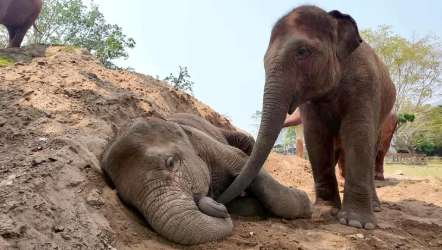

As daylight fades, elephants begin choosing where and when to settle for the night. Each individual follows a different rhythm: some rest early and remain asleep well into the morning, while others stay active longer. In peaceful surroundings, the night may be filled with the gentle breathing—and sometimes unmistakable snoring—of elephants sleeping deeply.

The condition of the resting area also matters. Elephants need ground that is dry, clean and stable before they can fully relax. Soft sand can provide a comfortable place to lie down, while damp or soiled conditions may prevent them from resting properly. Providing a suitable sleeping space is therefore an important part of protecting both their comfort and their health.

Sleep is not simply a pause in an elephant’s day. It is closely connected to physical recovery and emotional well-being. Elephants experiencing stress or uncertainty may struggle to settle, while those who feel protected can lie down without hesitation—even when trusted caregivers or herd members are nearby. Young elephants may also nap in the open, drawing reassurance from the familiar presence of their family group.

These quiet moments remind us that genuine rescue involves more than providing food, water and shelter. It means creating a life in which an elephant no longer needs to remain constantly alert—a life where the ground feels safe enough to lie upon and the surrounding world feels gentle enough to trust. At Elephant Rise, this is the future we hope every rescued elephant can know: one shaped by dignity, companionship and the freedom to rest in peace.
