
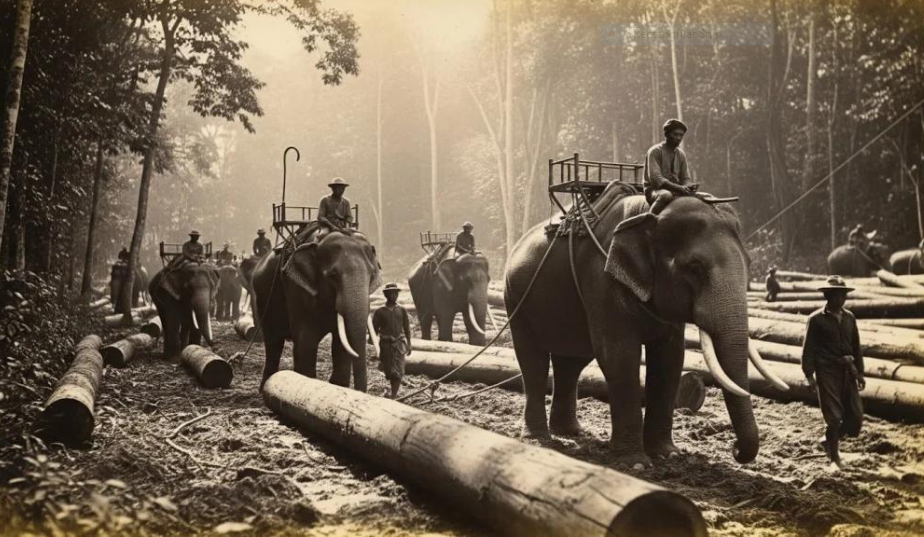
For thousands of years, elephants have shared a unique relationship with people across Asia and parts of Africa. Their remarkable intelligence, strength, and calm nature have made them valuable companions in many aspects of human life. Historical records show that elephants were used in transportation, agriculture, ceremonial events, and even warfare by ancient civilizations. In countries such as India, Sri Lanka, Thailand, and Myanmar, elephants helped move heavy timber through dense forests long before modern machinery existed.

Their ability to navigate difficult terrain made them indispensable in regions where vehicles could not easily operate. Throughout history, elephants have also held deep cultural and spiritual significance, appearing in religious traditions, festivals, and works of art that celebrate their wisdom and strength.

Over time, society's understanding of animal welfare has evolved. As technology replaced the need for elephant labor, many countries introduced stronger laws and conservation programs to protect these magnificent animals. Today, the focus has shifted from using elephants for work to ensuring their welfare, conserving their natural habitats, and promoting peaceful coexistence between humans and wildlife.

Ethical sanctuaries now provide care for retired working elephants, while conservation organizations collaborate with local communities to reduce human–elephant conflict and restore natural ecosystems.

The long history between humans and elephants reminds us of both the benefits and responsibilities of this relationship. By learning from the past and respecting elephants as intelligent, wild animals, we can build a future based on compassion rather than exploitation. Protecting elephants today ensures that future generations will continue to admire these extraordinary animals living freely in healthy and connected landscapes.
