
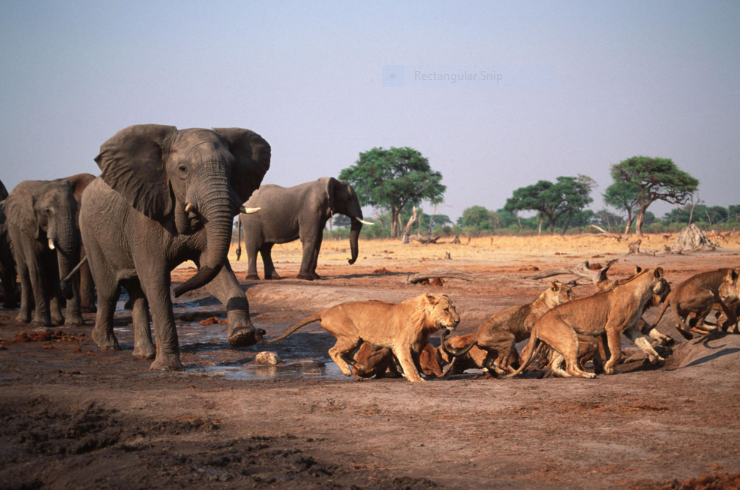
An elephant's tusks are much more than impressive features—they are essential tools for survival. Elephants use their tusks to dig for water, strip bark from trees, move heavy branches, defend themselves, and compete with rivals. When an elephant loses a tusk through injury, accident, or natural wear, it must learn to adapt to everyday life using its remaining tusk and trunk.

If only one tusk is lost, most elephants gradually become more dependent on the other. Over time, the remaining tusk may show increased wear because it is used more frequently for digging and feeding. The elephant also relies more heavily on its powerful trunk, which is capable of performing many tasks with remarkable precision.

Losing both tusks can make certain activities more challenging, but it does not necessarily prevent an elephant from surviving. Many tuskless elephants continue to find food, travel with their herds, and raise healthy calves. In some African elephant populations, a growing number of females are naturally born without tusks, a trait that has become more common in areas where intense ivory poaching occurred over many years.

The greatest danger is when a tusk is broken close to its base. Because a tusk contains living tissue and blood vessels, a severe fracture can cause pain, infection, and difficulty feeding. Wildlife veterinarians may sometimes treat injured elephants in protected areas, but in the wild, recovery depends largely on the elephant's resilience and the support of its herd.

An elephant's ability to adapt after losing a tusk is another example of its intelligence and determination. By protecting elephants from poaching and preserving their natural habitats, we help ensure these remarkable animals can continue to thrive for generations to come.