
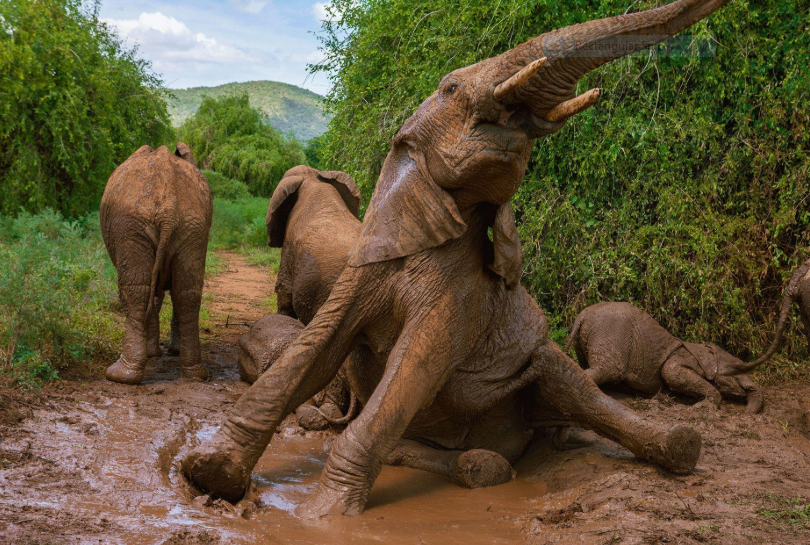
An elephant's skin may look thick and tough, but it is one of the most remarkable and sensitive features of these gentle giants. Measuring up to 2.5 centimeters (about 1 inch) thick in some areas, elephant skin provides protection from thorns, rough vegetation, and the challenges of life in the wild. Yet despite its strength, it is filled with nerve endings that make elephants highly sensitive to touch, allowing them to communicate through gentle nudges, comforting trunk touches, and close physical contact within their families.

The deep wrinkles and tiny cracks covering an elephant's skin serve an important purpose. These natural grooves trap water and mud, helping the animals stay cool for longer periods as moisture slowly evaporates. Mud also acts as a protective layer against the sun's harsh rays and biting insects, making regular mud baths an essential part of an elephant's daily routine. Dusting themselves with soil provides similar benefits when water or mud is unavailable.

Elephant skin also requires constant care. As mud dries, elephants often rub against trees, rocks, or termite mounds to remove dead skin, parasites, and dirt. This natural exfoliation helps keep their skin healthy while relieving irritation. Calves learn these behaviors by watching older members of the herd, demonstrating how important social learning is to elephant survival.

Protecting elephants means protecting the habitats that support these natural behaviors. Healthy forests, wetlands, and grasslands provide access to water, mud, shade, and rubbing surfaces that elephants rely on to care for their skin. By conserving these ecosystems, we help ensure that elephants can continue thriving in the wild while maintaining the remarkable adaptations that have allowed them to survive for millions of years.
