
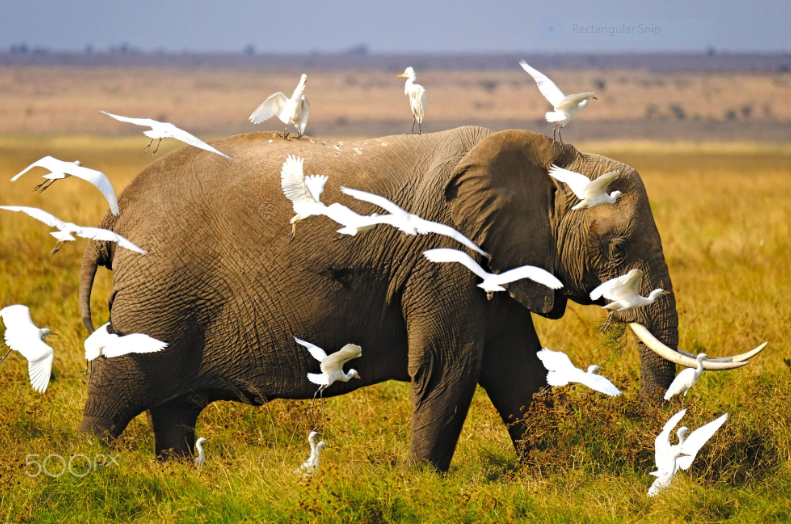
Elephants and birds share a fascinating relationship that benefits both species. As elephants move through forests and grasslands, they disturb insects, small reptiles, and seeds hidden in the vegetation. This creates feeding opportunities for birds, which often follow closely behind to catch insects or other prey that would otherwise remain concealed.

Several bird species, including cattle egrets, oxpeckers, and drongos, are commonly seen near elephants. Cattle egrets feed on insects flushed out by the elephants' footsteps, while oxpeckers perch on the elephants' backs to remove ticks and other parasites. In return, the birds receive a reliable source of food, and elephants may benefit from reduced parasite loads.

Birds can also act as extra sets of eyes and ears. Their sudden alarm calls or rapid movements may alert elephants to nearby predators or disturbances. Although elephants primarily rely on their exceptional hearing, smell, and memory to stay safe, they can sometimes respond to the warning signals given by birds sharing the same habitat.

This remarkable partnership highlights the interconnectedness of nature. Even animals as different as elephants and birds can depend on one another in subtle yet meaningful ways. By protecting elephant habitats, we also safeguard countless bird species and other wildlife that rely on these ecosystems. Every healthy landscape supports a web of relationships that helps maintain the balance of nature, reminding us that conserving one species often benefits many others.
