
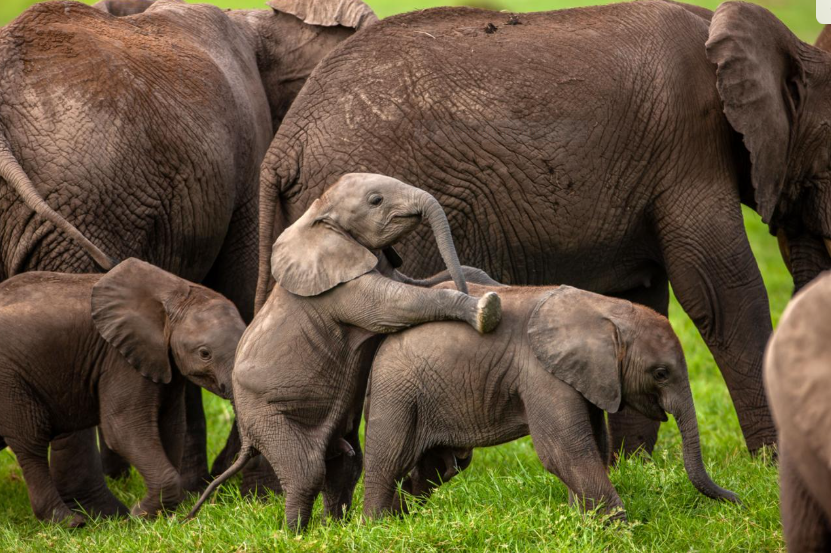
An elephant's trunk is one of the most remarkable features in the animal kingdom. More than just a long nose, it is a powerful and highly sensitive tool that helps elephants survive in almost every aspect of their daily lives.

A Nose and an Upper Lip Combined

An elephant's trunk is formed from its nose and upper lip. It contains thousands of muscles, allowing it to perform both powerful and delicate movements with incredible precision.
A Tool for Everyday Life

Elephants use their trunks to breathe, smell, drink water, and gather food. They can pull down tree branches, pick up heavy logs, or carefully lift a single blade of grass.
The trunk also helps elephants spray water over their bodies, throw dust or mud onto their skin for protection, and cool themselves on hot days.
Communication and Care

A trunk is also an important way for elephants to communicate. They greet one another by touching trunks, comfort family members with gentle strokes, and guide young calves as they learn to explore the world.
Mothers use their trunks to help newborn calves stand, while herd members often use gentle touches to strengthen social bonds.
A Powerful Sense of Smell

Elephants have an excellent sense of smell, and their trunks allow them to detect food, water, and even the scent of other elephants from long distances. This ability is especially valuable during dry seasons when water is scarce.
Nature's Perfect Multi-Tool

From feeding and drinking to communication and protection, an elephant's trunk performs countless tasks every day. Its remarkable strength, flexibility, and sensitivity make it one of the most versatile body parts found in any land animal.

At Elephant Rise, we believe that understanding the extraordinary adaptations of elephants helps us appreciate why these gentle giants deserve our protection for generations to come.
