
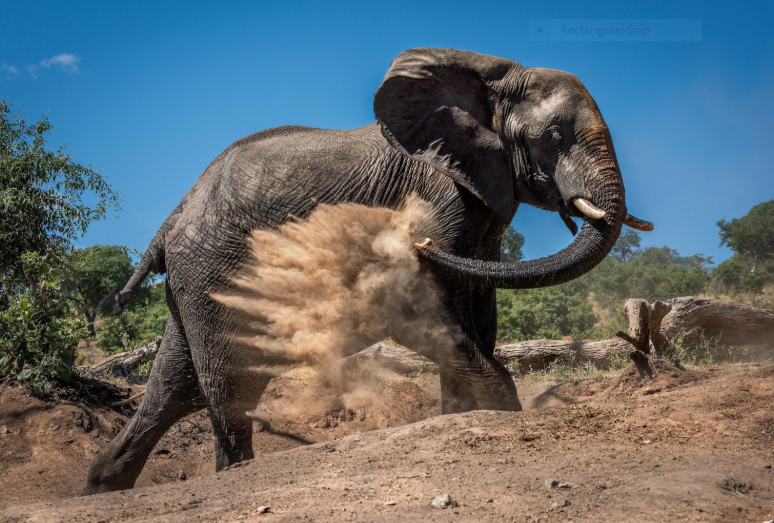
Watching an elephant scoop up a trunkful of dust and spray it over its body is a familiar sight in the wild. While this behavior may appear playful, it is actually an essential part of an elephant's daily routine. Dust bathing helps elephants stay healthy, comfortable, and protected in the challenging environments they call home.
One of the primary reasons elephants throw dust on themselves is to protect their skin from the sun. Unlike humans, elephants cannot rely on sweat to cool their bodies, and although their skin is thick, it can still be damaged by intense sunlight. A layer of fine dust acts like a natural sunscreen, covering exposed areas and reducing direct exposure to the sun's rays.
Dust also helps elephants stay cool. After bathing in water or covering themselves in mud, elephants often add a layer of dry soil or sand. The dust absorbs moisture from the surface of their skin, and as the remaining water slowly evaporates, it helps lower body temperature. Combined with their large ears and wrinkled skin, dust bathing is an effective way to regulate heat in hot climates.
Another important benefit is protection from insects and parasites. Flies, mosquitoes, ticks, and other biting insects can cause irritation and spread disease. The dusty coating creates a temporary barrier that makes it more difficult for these pests to reach the elephant's skin. This simple habit helps reduce discomfort and keeps elephants healthier throughout the year.
Dust bathing also helps care for the skin. As elephants rub dust over their bodies, tiny particles can remove loose skin, dried mud, and other debris. This natural cleaning process helps maintain healthy skin and complements regular mud baths and swimming.
Young elephants learn this behavior by watching older members of the herd. Calves often imitate their mothers and other adults, enthusiastically spraying dust over themselves even before they become skilled at using their trunks. These playful moments are an important part of learning the behaviors they will rely on throughout their lives.
The type of dust elephants use often depends on their surroundings. In dry grasslands, they may use loose soil or fine sand, while elephants living in forests may toss dry earth collected from trails or riverbanks. Whatever the habitat, the purpose remains the same—to protect and care for their bodies using the natural resources around them.
Dust bathing is often combined with other behaviors such as rolling in mud, standing in water, or resting in the shade. Together, these activities help elephants cope with heat, conserve energy, and protect their sensitive skin from the harsh conditions of their environment.
The next time you see an elephant showering itself with dust, remember that it is doing much more than playing. This remarkable behavior is a testament to millions of years of evolution, allowing elephants to thrive in some of the world's most demanding landscapes.
By understanding simple daily habits like dust bathing, we gain a deeper appreciation for the intelligence and adaptability of elephants. Protecting these magnificent animals also means protecting the habitats that provide the water, soil, and natural resources they need to survive and continue shaping the ecosystems they call home.