
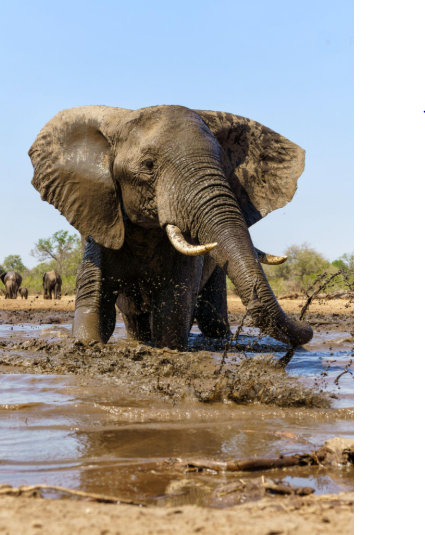

Although elephants spend plenty of time around rivers and watering holes, mud is often even more valuable to them than water alone. A thick layer of mud acts like nature's own sunscreen, shielding their sensitive skin from the intense heat of the sun while helping to keep biting insects at bay. As the mud slowly dries, it also traps dirt, parasites, and dead skin. When elephants rub against trees or rocks, the dried mud flakes away, leaving their skin cleaner and healthier.

Mud wallows are also important places for social interaction. Young elephants roll, splash, and play together while older herd members relax nearby. These shared experiences strengthen family bonds and give calves opportunities to learn natural behaviors by watching the adults. On hot days, the moisture in the mud evaporates gradually, cooling the elephants' massive bodies for much longer than a quick swim would.

Protecting wetlands, rivers, and natural mud wallows is essential for elephant conservation. Without access to these habitats, elephants lose an important way to regulate their body temperature, care for their skin, and socialize with their families. Every healthy mud wallow is more than just a muddy puddle—it's a vital part of an elephant's daily life and a reminder of why preserving natural ecosystems is so important.
