
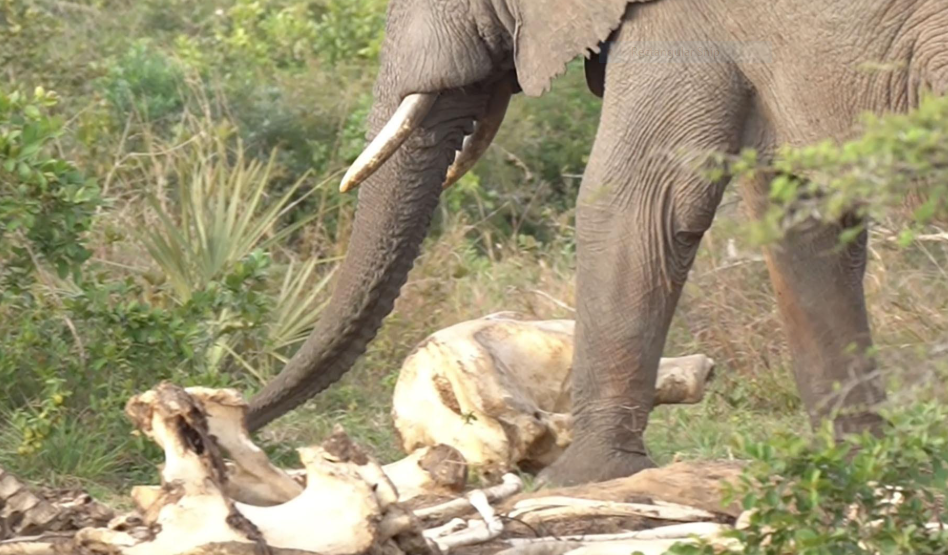
Among the many remarkable behaviors observed in elephants, one of the most intriguing is their tendency to stop and investigate the bones of other elephants. In the wild, researchers have repeatedly documented elephants gently touching skulls, tusks, and other remains with their trunks and feet, often spending several minutes examining them before quietly moving on. While scientists continue to study the meaning of this behavior, it offers a fascinating glimpse into the emotional and social complexity of these extraordinary animals.

Elephants rely heavily on their trunks to explore the world around them. Their trunks contain thousands of muscles and an exceptional sense of touch and smell, allowing them to gather detailed information about objects in their environment. When they encounter elephant bones, they often handle them more carefully than the remains of other animals, suggesting they may recognize the scent or characteristics of members of their own species.

Some researchers believe this behavior reflects elephants' strong social bonds and remarkable memory. Elephant families remain closely connected for decades, and individuals can remember companions and important locations over many years. Pausing to investigate the remains of another elephant may be linked to this long-term memory, although there is no scientific consensus that elephants understand death in the same way humans do. Instead, the behavior is best viewed as evidence of their curiosity, social awareness, and deep attachment to other elephants.

Protecting elephants means safeguarding not only a species but also the complex social relationships that define their lives. Every new scientific discovery reminds us that elephants are intelligent, emotionally rich animals whose behaviors continue to inspire both research and conservation. By preserving their natural habitats and allowing them to live in stable family groups, we help ensure these remarkable behaviors can continue to be observed for generations to come.
