
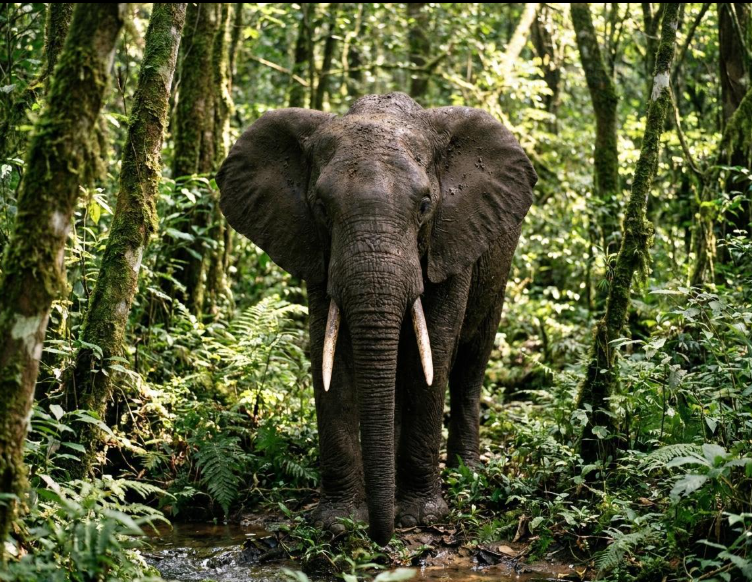
Although all elephants share remarkable intelligence, strong family bonds, and complex social behaviors, not all elephants live in the same environment. African forest elephants and African savanna elephants have adapted to very different habitats over thousands of years, shaping the way they move, feed, communicate, and interact with one another. Their behavior reflects the unique challenges and opportunities of the ecosystems they call home.
![18 Wild Animals in Mozambique [Wildlife in Mozambique] - Kevmrc](https://images.openai.com/static-rsc-4/Fv2CgpEtRm5Pfw1EdINb-45by5KCgLsyCAQTQSGWTS5Plg_NEULWz4j9LW31xzJ7gj9ao3awOsv9yZ_F_tVs78MUfFP5ZkCk5TA0NQdXqcn5VRACiUiT90YC1wzbzYADjvPCa1gPCB6nPiH4cSbIaZtLrkmLMmN528uCsVeuly2N51bIvFPPgbS7y0d-MB6d?purpose=fullsize)
Forest elephants inhabit the dense rainforests of Central Africa, where thick vegetation limits visibility and creates narrow pathways. They are generally smaller than their savanna relatives, allowing them to move more easily through the forest. Because food is scattered among trees and shrubs, forest elephants often travel in smaller family groups. They rely heavily on their keen sense of smell and low-frequency vocalizations to stay connected, even when family members cannot see one another through the dense vegetation. As they feed on fruits and other forest plants, they disperse seeds across vast distances, playing a vital role in maintaining healthy tropical forests.

Savanna elephants, in contrast, roam the wide-open grasslands and woodlands of eastern and southern Africa. These expansive landscapes provide greater visibility, making it easier for larger family groups to stay together while searching for water and food. Savanna elephants often travel long distances between seasonal water sources and use a wide range of vocal, visual, and tactile signals to coordinate the herd's movements. Their feeding habits help shape grasslands by knocking down trees, clearing vegetation, and creating habitats that benefit many other wildlife species.

Despite their behavioral differences, both forest and savanna elephants are essential ecosystem engineers. Each has evolved to thrive in its own environment while contributing to the health and diversity of the landscapes they inhabit. Protecting both forest and savanna habitats ensures these extraordinary animals can continue fulfilling their unique ecological roles, helping preserve biodiversity for generations to come.