
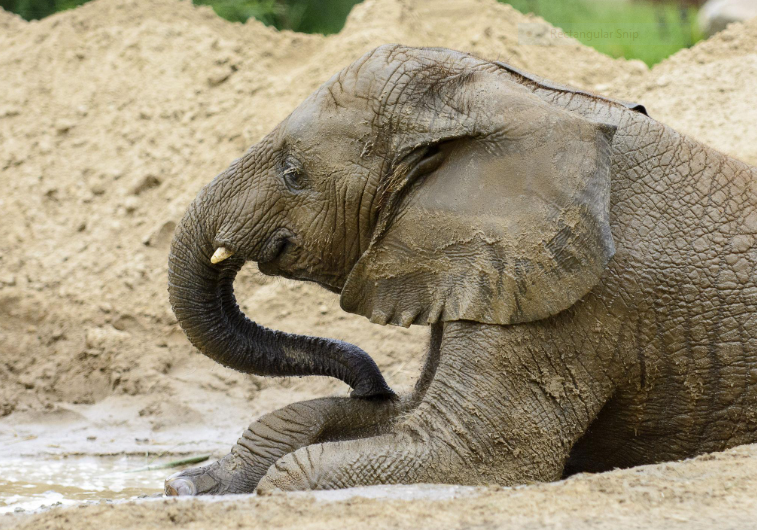
An elephant's skin is one of its most distinctive features. Thick, rough, and deeply wrinkled, it gives these magnificent animals a rugged appearance that reflects a lifetime spent roaming forests, grasslands, and savannahs. But those wrinkles are far more than a sign of age or size—they are an extraordinary adaptation that helps elephants survive in some of the world's harshest environments.

Although elephant skin can be up to 2.5 centimeters (1 inch) thick in some areas, it is surprisingly sensitive. Beneath its tough outer layer lies a network of nerve endings that allows elephants to feel the touch of another elephant, detect the bite of an insect, and respond to changes in their surroundings. This combination of strength and sensitivity helps protect them while allowing them to remain closely connected with their family members.

One of the most important functions of an elephant's wrinkled skin is keeping the body cool. Elephants cannot sweat like humans, making it difficult for them to release excess heat. Instead, the countless folds and creases across their skin trap water and mud after bathing. As this moisture slowly evaporates, it cools the elephant's body for much longer than smooth skin could, helping the animal stay comfortable under the hot sun.

These wrinkles also improve the effectiveness of dust baths. After covering themselves with soil or sand, tiny particles become lodged within the folds of the skin, creating a natural protective layer. This coating helps shield elephants from the sun's intense rays and reduces irritation caused by insects and parasites.

Mud plays an equally important role. Elephants frequently bathe in rivers, ponds, or muddy pools before coating themselves in wet earth. As the mud dries, it forms a temporary barrier that protects the skin from drying out, reduces insect bites, and provides additional cooling. The wrinkles help hold this protective layer in place, allowing it to remain effective for longer periods.

Despite its thickness, elephant skin requires constant care. Without regular access to water, mud, and shade, it can become dry and cracked. That is why wild elephants spend much of their day searching for water sources and taking mud or dust baths whenever conditions allow. These daily routines are essential for maintaining healthy skin and overall well-being.

The appearance of elephant skin can also vary between species. African elephants generally have more deeply wrinkled skin than Asian elephants, an adaptation that helps them cope with the hotter, drier climates of the African savannah. Asian elephants, which often inhabit more humid forests, tend to have smoother skin, although wrinkles remain an important part of their natural cooling system.

Scientists continue to study elephant skin because its remarkable design may inspire new technologies for managing heat and conserving water. The microscopic patterns within the wrinkles demonstrate how millions of years of evolution have created highly efficient solutions to environmental challenges.

Every wrinkle tells a story of survival. It helps an elephant stay cool, protects against the sun and insects, and supports life in demanding habitats. By understanding these remarkable adaptations, we gain a deeper appreciation for the complexity of elephants and the importance of protecting the landscapes where they have evolved for millions of years.
When we protect elephants, we are not only saving one of Earth's most iconic animals—we are preserving the extraordinary natural adaptations that enable them to thrive and the ecosystems that depend on their presence.