
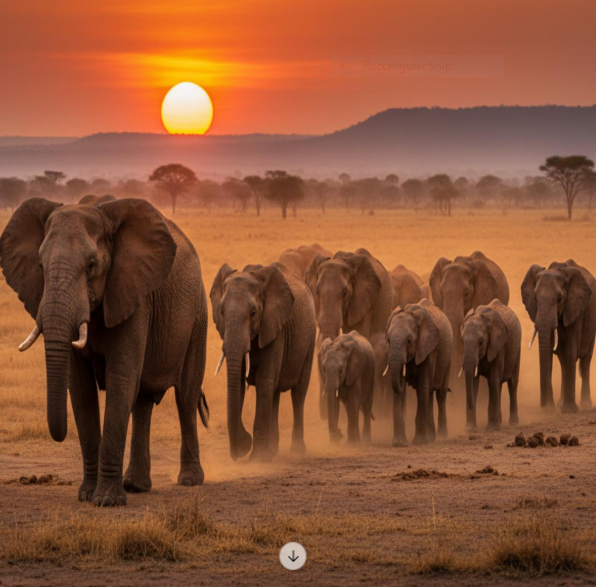
In every elephant family, the oldest female, known as the matriarch, plays a crucial role in the survival of the herd. Far more than just a leader, she is the family's living memory, carrying decades of knowledge about the landscape, seasonal changes, and potential dangers. Her experience helps guide the herd through both ordinary days and the most challenging times.

Old matriarchs remember the locations of hidden water sources, reliable feeding grounds, and traditional migration routes that may have been used for generations. During droughts or periods of food shortage, this knowledge can mean the difference between life and death. Younger elephants rely on her decisions, trusting her to lead them safely across unfamiliar or changing environments.

A matriarch also protects the social structure of the herd. She helps keep family members together, settles conflicts, and responds calmly when predators or other threats appear. When calves are born, her experience benefits not only the mothers but the entire family, as she guides younger females in caring for the newest generation.

Scientists have found that herds led by older matriarchs often make better decisions when facing danger. Their ability to recognize risks, remember past experiences, and respond appropriately increases the herd's chances of survival. This wisdom cannot be replaced quickly, making the loss of an experienced matriarch especially difficult for an elephant family.

Protecting older female elephants is therefore essential for conservation. By safeguarding these wise leaders, we preserve generations of knowledge that help entire herds survive and thrive. Every matriarch carries a lifetime of experience, and her guidance ensures that the story of her family continues long into the future.